
Will micro-strategy enter the death spiral? How's the macro going in the second half of the year
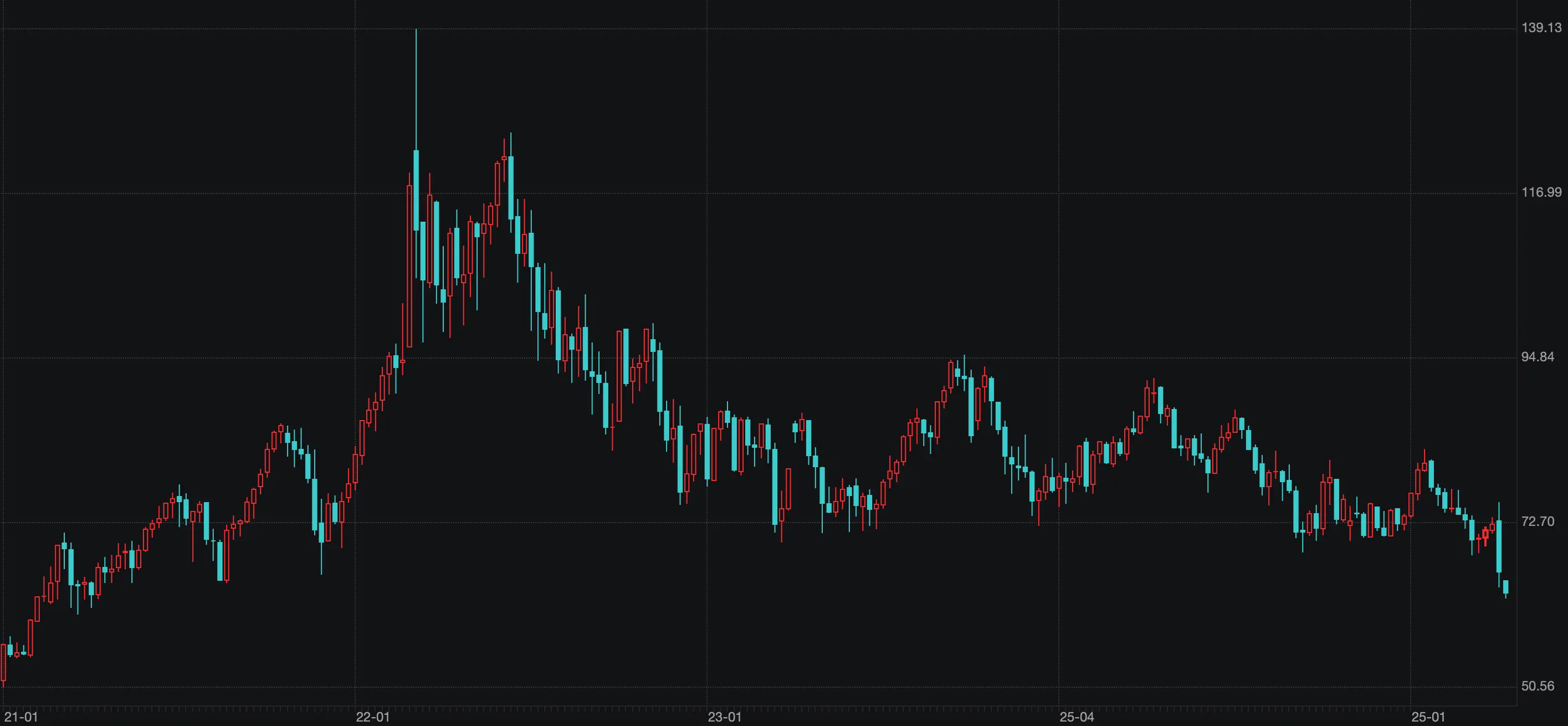
The author, Wu, says the block chain
The content of this paper does not constitute any financial recommendation for investment, and readers are invited to strictly observe the laws and regulations of their location。
The guest of the current U.N.'s invitation for unencrypted podcasts is Jung De didier, a front-line technology investor, who revolves around the recent drop in bitcoin, changes in micro-strategy (formerly MicroStrategy), AI-driven US stock rise, encryption exchange access to US stock and macro-foreground。
according to doier, the core of the recent decline in bitcoin is not simply a macro or ETF buy-back, but rather the expectation that the market will begin to re-pricing micro-strategies that may continue to pay priority dividends under the principle of "neutrality of each currency content". At the same time, AI is reshaping the labour force structure, and Token is seen as a new factor of production, driving the growth of the US stock AI industrial chain. The encryption industry, for its part, may move from raw currency to a chain of real assets, a chain-based machine economy and a more mature industrialization phase。
THE GUEST DOES NOT SPEAK FOR WU AND DOES NOT CONSTITUTE ANY INVESTMENT PROPOSAL. PLEASE STRICTLY FOLLOW LOCAL LAWS AND REGULATIONS. AUDIO TRANSFER AND TRANSLATION IS DONE BY GPT AND MAY CONTAIN ERRORS. PLEASE LISTEN TO THE FULL PODCAST:
Little universe:
https://www.xiaoyuzhoufm.com/episode/6a337db43a22a695585c365
Micro-strategy Selling Experiment: Continuing to break down expectations to take over the market
CAT: BITCOIN HAS FALLEN SO HARD LATELY, THERE'S A LOT OF EXPLANATION ON THE MARKET. SOME SAY IT'S A SMALL STRATEGY TO SELL MONEY, OTHERS SAY IT'S AN ETF FORECLOSURE, AND OTHERS ARE ATTRIBUTED TO MACRO-CHANGES OR LEVERAGE CLEARING. WHICH ONE DO YOU THINK IS MOST IMPORTANT
doier: i think the core is a micro-strategy, but it's not the money itself that really suppresses the market, it's the market that starts to expect it to continue。
THE MICRO-STRATEGY WAS PRESENTED AT THE MAY PERFORMANCE SESSION TO MAINTAIN THE NEUTRALITY OF EACH SHARE. AS PRIORITY SHARES AND DEBT INSTRUMENTS, SUCH AS STRC, STRZ, STRD, STRF, ARE INCREASING, BITCOIN IS NO LONGER JUST AN ASSET OF ORDINARY SHAREHOLDERS, BUT FIRST COVERS THE INTERESTS OF CREDITORS AND PRIORITY SHAREHOLDERS. SO THE PRICE OF MAINTAINING BPS NEUTRALITY BECOMES HIGHER。
IN THE PAST, THE MARKET CONSIDERED THAT IT PAID FOR PRIORITY DIVIDENDS MAINLY THROUGH THE SALE OF EQUITIES, WITH LITTLE PRESSURE ON THE COIN; HOWEVER, THE THRESHOLD FOR NEW EQUITY FINANCING WAS NOW RAISED AND PRESSURE BEGAN TO SHIFT TO THE BITCOIN. AS LONG AS MMV CONTINUES TO FALL BELOW THE NEUTRAL THRESHOLD, IT IS MORE LIKELY TO COVER CASH FLOWS THROUGH SMALL, CONTINUOUS SALES. IN PARTICULAR, IF THE RATE OF INTEREST PAYMENTS INCREASES FURTHER, THE MARKET NATURALLY EXPECTS THAT IT WILL NOT BE SOLD OCCASIONALLY, BUT MAY SELL AT REGULAR INTERVALS。
SO THE KEY TO THIS FALL IS NOT “HOW MUCH HAS BEEN SOLD”, BUT “WILL THE FUTURE BE SOLD FOREVER”. UNDER THIS LOGIC, ETF SELLS MORE LIKE A RESULT THAN A CAUSE. AS SOON AS THE MARKET JUDGES THAT MICRO-STRATEGIES WILL CONTINUE TO SELL, THE FUNDS WILL BE WITHDRAWN EARLY。
Cat: So what did you just say, Michael Saylor was doing a financial experiment
doier: in essence, he is testing the market's ability to carry on small and continuous sales。
FROM A FINANCIAL POINT OF VIEW, WHERE THE MMV PREMIUM IS LOW, IT IS THE MOST ADVANTAGEOUS FIRST STEP THAT THE PETTY CURRENCY SELLS LESS HARM THAN THE STOCK SELLS PER SHARE. THE PROBLEM IS THAT SINCE THE LARGE-SCALE ISSUANCE OF THE STRC SINCE MARCH, INTEREST AND DIVIDENDS EXPENDITURES ON PRIORITY SHARES AND SUSTAINABILITY TOOLS HAVE INCREASED SIGNIFICANTLY, AND CASH FLOW MANAGEMENT HAS BECOME A PROBLEM. SO THE POINT IS NO LONGER WHETHER TO MANAGE CASH FLOWS, BUT IN WHAT WAY。
IF THE MARKET IS ABLE TO WITHSTAND THIS CONSTANT, PETTY CURRENCY SHOCK, THE SYSTEM WILL BE MAINTAINED; BUT IF THE PRACTICE IN TURN LOWERS STOCK PRICES, LOWERS MMV, INCREASES ANCHORAGE AND FURTHER STRENGTHENS EXPECTATIONS OF “CONTINUING CURRENCY”, IT MAY HAVE TO SHIFT SOFTLY, FOR EXAMPLE, TO RE-DEPENDENCE ON STOCK SALES, OR TO MIX STOCK AND CURRENCY USE. THIS, WHILE SACRIFICING A PORTION OF THE CURRENCY PER SHARE, MITIGATES THE IMPACT ON CURRENCY AND EQUITY PRICES AND IS THE BEST SOLUTION IN THE SECOND TIER。
So it's essentially a game between Michael Saylor and the market. He was looking at where the market would be strong enough to take on the money, and the market was waiting for lower and more definite prices。
Cat: Will that turn into a micro-strategy and bitcoin going into a "death spiral"
doier: i don't think that's the case alone. if that were to happen, there would normally be new macrospaces or larger systemic shocks。
As long as there is a soft turn back and no more rigid currency sales, it is likely that the funds will return. The question is not whether there is a connection, but what the price would be. It may be 62,000, or even lower, and the market is waiting for it。
So my judgment is cautious and optimistic: The fall was more the result of the structural pressures of micro-strategy changes in its own financial structure than simply the tightening of macro-liquidity. Without the addition of significant space, it is unlikely that the situation will be reversed and that it will not be easy to develop directly into a real “death spiral”。
Token is seen as the labour force of the new age
CAT BOY: ALTHOUGH THE ENCRYPTION INDUSTRY IS LOW NOW, AI IS HOT, ESPECIALLY LIGHT MODULES, SEMICONDUCTORS, DATA CENTRES IN THE U.S. STOCK. WHAT DO YOU THINK THE CORE DRIVE IS
doier: the core is really simple, token is essentially becoming a new age workforce。
The core factors of production in enterprises in the past were human beings, whether manual or intellectual. But now, many of the implementations that were originally undertaken by people are being replaced by AI and token. The real scarcity of the future is likely to leave only a small number of people who can complete the closed circle: they can propose goals, design programmes, drive implementation and ultimately solve problems. Such persons, together with a large number of tokens, constitute the new labour force system。
THIS WOULD DIRECTLY CHANGE THE ORGANIZATIONAL STRUCTURE OF THE ENTERPRISE. BUSINESSES USED TO HAVE A LOT OF LAYERS BECAUSE INFORMATION WAS PASSED ON TO PEOPLE; BUT IN THE AI ERA, MANY MIDDLE-LEVEL, ASSISTANT, IT AND EXECUTIVE POSITIONS WERE COMPRESSED. WHAT IS TRULY VALUABLE IS NOT JUST THE POWER OF IMPLEMENTATION, BUT THE POWER OF INFLUENCE, DECISION-MAKING AND IMAGINATION。
Thus, in essence, the business used to pay its employees, and in the future it would pay more token, models and calculations. The model company then invests the money upstream to purchase chips, energy, light modules and data centres. These expansions, which are limited and do not keep up with demand, will be the most sustainable part of the AI industrial chain, which is at the heart of the rising US stock。
SERVICES ARE THE FIRST TO BE HIT, BECAUSE ACCOUNTING, LAW, CONSULTING, DATA ANALYSIS AND KNOWLEDGE-BASED SERVICES ARE THE MOST EASILY REPLACED BY AI. IN THE FUTURE, THERE WILL BE INCREASED AUTOMATION WITHIN ENTERPRISES, AND A CHAIN-BASED MACHINE ECONOMY MAY BE FORMED BETWEEN ENTERPRISES. BY THAT TIME, MANY TRANSACTIONS, COLLABORATIONS AND EVEN PAYMENTS WOULD HAVE BEEN MADE BY MACHINES。
Cat: What you mean is that this round is not just short-term sex, it's medium- and long-term sustainability, and it's probably early
doier: yeah, i think the age of machine economy is just beginning。
many people also have a different understanding of “one-man company”. it's not a one-man fight, it's a man who runs with a dozen, dozens of smart bodies, which together could be equivalent to the efficiency of hundreds of people in the past. so the premise of a single company is that there is a lot of intelligence behind it to provide labour。
And that's why I've always stressed that token is the new workforce. Businesses used to pay people and now increasingly turn their budgets towards token. As long as token can continue to scale up income, the profitability of the enterprise will increase significantly, which is the core logic of the market looking at multiple AI industrial chains。
So the United States stock market now reflects the expectation that more and more companies will become AI raw companies that will significantly increase their profitability by replacing the workforce with token and increasing automation. This is also the most fundamental and rational driving force behind this round。
The exchange moves to the U.S. stock, and users don't have to change the trade logic
Cat: As the US stock continues to rise, many encryption exchanges also open the US stock route. What do you think of this? Is it because the encryption industry itself has no hot spots, and the exchange has to be proactive in creating demand, or is it deeper? Also, would this lead to further financial outflows from the encryption industry
doier: As I said, the offshore CEX ended up with only two roads。
THE FIRST IS TO PREDICT THE MARKET, BUT THE ROAD IS VERY DIFFICULT. NOW, THE HEAD PATTERN IS BASICALLY IN PLACE, AND MOST OF THE EXISTING CEXS ARE HARD TO REALLY TRANSFORM INTO THE NEXT GENERATION OF EVERYTHING EXCHANGES。
The second is to turn to distribution channels for real world assets, and the most important real assets now are the United States stock, the United States debt and gold。
More fundamentally, over the years, there have been very few truly valuable encrypted primary assets. Bitcoin counts one, and a few DeFi infrastructure and public chains count, but apart from this, most primary assets lack sustained intrinsic value and cash flow support. That being the case, the trading infrastructure built around these assets will eventually find new and valuable targets。
SO IT'S NATURAL THAT CEX TURNS TO AMERICA. I DON'T THINK IT'S A LOT OF PRESSURE ON ENCRYPTED ASSETS, MORE LIKE THE INDUSTRY IS GOING BACK TO REALITY: THERE ARE FEW ASSETS OF REAL VALUE, AND EXCHANGES ARE SIMPLY TURNING TO THINGS THAT SUPPORT MOBILITY MORE。
In the long run, however, this may not be a bad thing. The core value of the block chain is not simply the issuance of original assets, but the provision of decentrized options, as well as more efficient and lower-cost settlements and transactions. The chaining of real world assets is in itself a meaningful direction。
and in the longer term, the block chain is more like a machine design technique. for the next five to ten years, it is more likely that people interact with anent, angent and angent complete payments, transactions and collaboration along the chain. thus, these chain infrastructures built today can be used directly by machines。
So in the long run, I think it's good for a bit of money. Because more people and more machines end up in contact with chain assets。
Cats: If, for ordinary users, they used to fire money, bitcoin, or public-chain assets in the encryption market, now they're going to share in America, it's not the same logic. Whether it be the financial cycle, the valuation system or the regulatory rules, there are significant differences. What would you say if you gave one of the most important suggestions to these long-standing users or traders in the encrypted world
doier: i don't think they need to change too much。
because american stock and chain assets are essentially similar. the u.s. shares have both value and growth units and many assets with meme properties. a central reason for the weakness of meme behavior in this chain is that the most appealing meme asset has actually moved to the united states。
The story of these assets is also essentially “change the world”. The former narrative belonged to a block chain, and now the stronger version appears in US shares, such as quantum computing, fusion, SMR. It's hard to explain these things in many cases by financials, cash flows or DCF alone, which also have very strong meme properties。
so, those who used to like to go after the money, the meme, went to the united states and went after these long-term concepts, the logic was the same, not necessarily unadapted. the other category of people who would have looked at cash flows, looked at basics, looked for value support, went to the u.s. and found the equivalent value and growth units。
So I mean, all the styles in the money ring, in the US stock, actually have their places. Most people do not need to force changes in trading patterns and find their own familiar types of assets。
It is a real suggestion that we do not push our own approach to the market. Those who survive now usually have a set of ways of survival that they have tested, and it is more important to continue to maintain that part that works。
1011. The event has seriously disrupted encryption
Cat: Listen to your analysis, it's a dramatic picture in my head. It seems as if the past period of bonfire is over, because the original charades are now almost all found in the United States stock and even more relevant. Does that make sense
doier: you can understand that。
The central currency circle was destroyed too much because of the virtual end of the situation. The incident was very damaging to industry. On the surface, there's $19 billion in explosives, but there's probably more than that. I think it's closer to what's really happening。
Moreover, it should be noted that the loss is not the book value, but the cash. The overall market value of the encryption industry would not have been large, with a large number of locks and high parts, and a much smaller amount of real liquidity than it looks. In this context, the evaporation of tens of billions of dollars in cash in a single day has severely damaged human life and mobility throughout the industry。
So I think the 1011 incident was the last straw to crush the camp。
the reason why america's “meme assets” continue to be sold is simple: it's now the best market for global liquidity. if your own liquidity fails, it will shift to a more liquid market。
FROM THE UNITED STATES PERSPECTIVE, IT SUPPORTS BITCOIN, SUPPORTS BLOCK CHAINS AND HAS ITS OWN STRATEGIC CONSIDERATIONS. THE LOGIC OF THE UNITED STATES VERSION IS TO TURN THE BLOCK CHAINS, CHAIN MARKETS AND CEX INTO A GLOBAL CHANNEL FOR UNITED STATES ASSETS TO ATTRACT CAPITAL AND OBTAIN HOT MONEY. THAT IS WHY IT DRIVES THE UNITED STATES FINANCIAL SYSTEM UP THE CHAIN AND ESSENTIALLY EXPANDS THE GLOBAL FINANCING AND DISTRIBUTION CAPACITY OF UNITED STATES ASSETS。
Of course, that is just the understanding and usage of the United States Government. It is another matter whether the chain of blocks and the world of encryption will ultimately be shaped by the will of such States. It may be more realistic that the future will be a long-term complex relationship between the world and sovereign States that both cooperate, exploits and competes。
But so far, at least, the United States approach is indeed becoming a reality。
Be more careful with the macros in the second half of the year, but still good with AI and Web3 in the long term
Cat: What are your macro-judgements for the next six months, until the end of this year? What policy could be followed by the new Fed Chairman, Walsh, and how would it affect the overall market
doier: i think the market uncertainty is rising。
On the one hand, the market has increased considerably; on the other hand, there may be a few giant companies listed later, such as SpaceX, OpenAI and Anthropic. The real pressure is not just on financing the pumping of water, but on the quick inclusion of these trillion-class companies in the index, institutions may be forced to sell other weights for rebalancing in circumstances of limited liquidity, which may put pressure on markets. So into June, I'll be more cautious。
Another key variable is the midterm elections. If the Democrats eventually take down both houses, the Web3 and AI may all be free because they place greater emphasis on labour rights, regulation and supervision, rather than allowing front-line technologies to continue to expand at a high rate。
BUT BASICALLY, I THINK THE MARKET MAY HAVE UNDERESTIMATED AI'S REAL DRIVE TO THE ECONOMY. AI HAS PERMEATED MANY POINTS, ALTHOUGH EXISTING STATISTICAL METHODS DO NOT ALWAYS FULLY REFLECT THEM, SO IN THE LONG RUN IT HAS BEEN VERY STRONG FOR PRODUCTIVITY IMPROVEMENT。
THE REAL PROBLEM IS NOT JUST GROWTH, BUT DISTRIBUTION. IF DISTRIBUTION MECHANISMS ARE POORLY ADJUSTED, THERE MAY BE A SITUATION OF EXTREME POLARIZATION IN THE FUTURE: A SMALL NUMBER OF THOSE WHO MANAGE AI EARN MOST OF THEIR EARNINGS, WHILE LARGE NUMBERS OF MIDDLE-INCOME PEOPLE ARE SQUEEZED AND EVEN UNEMPLOYED. IN THAT CASE, WHILE PRODUCTIVITY HAS INCREASED, THE OVERALL CONSUMPTION CAPACITY OF SOCIETY WILL DECLINE, WHICH IS WHY I PREFER LONG-TERM DEFLATION TO LONG-TERM INFLATION。
SO THE DISTRIBUTION MECHANISM WILL BE CRITICAL IN THE COMING YEARS. SOMETHING LIKE AI TAX, I THINK THE RATE WILL DROP IN THREE TO FIVE YEARS, BECAUSE WITHOUT A NEW TAX SOURCE, MANY SOCIAL ARRANGEMENTS IN THE FUTURE WILL LACK A FINANCIAL BASE。
If we look only at the second half of this year to the next year, I do not want to draw particularly absolute conclusions. The pressure for short-term adjustments is indeed increasing, especially before and after SpaceX is on the market, but I think it's more like an adjustment, not to top it all. As long as capital expenditure on large plants continues, the overall situation is not over。
IN THE LONGER TERM, I STILL LOOK AT AI, AND I LOOK AT THE COMBINATION OF AI AND THE BLOCK CHAIN. IN THE FUTURE, THERE WILL BE INCREASED AUTOMATION WITHIN ENTERPRISES AND A CHAIN-BASED MACHINE ECONOMY BETWEEN ENTERPRISES, WHICH REMAINS UNCHANGED。
So I still think that the block chains and Web3 are promising, just to get more mature. The brainless, brainless stages of the past may have passed, and the future is more like an era of industrialization and institutionalization。
