
Trump can't handle the five signals of the Mey truce
From oil prices, elections to secret negotiations, is it true that Mei is going to cease fighting
The United States stock market experienced the most violent single-day shock in recent times。
From an extension of five days, to an extension of 10 days, the voices and rumours of various negotiations have surfaced, and the opinions of the United States and Iran have been strangely inconsistent。How much longer will this war last almost a month
A few days before the magazine, it was written about the five most likely scripts between the US-Iraq conflict, mentioning that "war ends in a short period of time" is the ideal script and the most desirable script for Trump. The current signals seem to suggest that there seems to be a great possibility of a rapid truce. Read about:What's after the smoke? Five endings to the Middle East WarI don't know。
The Trump administration is actively seeking a diplomatic transition in the interest of medium-term elections and avoiding the war quagmire; the United States and Israel have excluded Iran's Foreign Minister and Speaker from the military strike list, which is seen as a direct signal that negotiating chips are set aside to reach reconciliation through key figures。
Trump was anxious to get out
This is the key to understanding the course of the conflictThe first is to understand Trump's own mentality。
The Wall Street Journal, published 14 hours ago, Trump Tellsides He Winters Speedy End to Iran War revealed that Trump had privately informed the consultant that he believed that the conflict was in its final stages and urged the team to adhere to his previously publicly stated schedule of “four to six weeks”。
According to sources, White House officials are planning to visit China in mid-May, and they expect the war to end before the summit begins. The details are profound: Trump wants to visit China in the form of a "winner" rather than a war president who is in the mud。
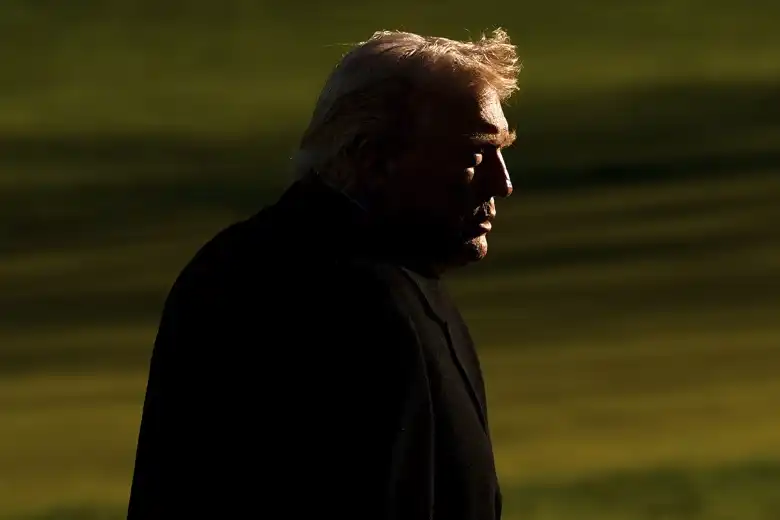
Another signal was that on March 25, at the annual fund-raising dinner of the National Republican Congress Committee, Trump made a large speech about Iran。
Observers noted that when the topic shifted from internal politics to the Middle East war, his tone shifted from anger to a somewhat defensive tone of interpretation. He has repeatedly stressed Iran's “extreme desire” for an agreement, claiming that the Iranian leadership is in private contact with the United States, that “they are eager to make the deal, but afraid to speak out because they fear being killed by their own people or by us”. He also said something interesting: "No nation's leaders want to do this job more than Iran's." This statement is almost the most explicit manifestation of his personal will。
He boasted at the dinner that the United States had "blowed" and claimed that a massive military strike had completed its core mission, meaning that it was time to stop. He also revealed a clear fear of war pushing up oil prices, usually the most realistic economic indicator of whether a war should continue. Trump had clearly told an assistant that the war had distracted him from other priorities, including the upcoming mid-term elections, immigration enforcement policies and the passage of voter eligibility legislation in Parliament。
It was also pointed out by analysts that, in the physical language of Trump that night, he had shown great impatience, even angry with the Chief Justices Gosachi and Barret, who had been promoted to them, publicly repulsing them: "I am sick of them because they are harmful to the nation."
He also expressed concern, including in his speech, about the war pushing up oil prices, which is usually a realistic economic indicator of whether the war should stop。
In the face of oil price shocks, Wall Street is trying to find a pattern in the swing of the policy of the Trump government。
A number of observers have found that, whenever energy prices or borrowing costs touch a particular threshold, the White House's rhetoric turns to decomposition, i.e. the "TACO Time" of Tripp。
Wall Street has noted that, according to a senior energy trader, when US crude oil prices are close to $95 to $100 per barrel, the White House ' s cooling rhetoric increases dramatically, with market expectations of government intervention rising. Onyx Capital Group, an oil market analyst, Jorge Montepeque, pointed out that gasoline prices exceeded $4 per gallon were politically devastating, and Trump was apparently concerned about high oil prices。
The rate of return on United States debt is another warning line that triggers cooling. Monica Defend, Director of the Amundi Institute for Investment, stated that Trump became extremely sensitive to the rate of return on the national debt during his second term, "When the return on the 10-year bond is close to 4.5 per cent, the government is really nervous, and this is usually the time for action. To this end, the German Strategy Manager, Maximilian Uleer, has developed a set of “pressure indices” that are used to prejudge the White House’s strategic adjustment nodes, combined with indicators such as inflation expectations and the return on US debt。
The political pressures brought about by economic pressures cannot be ignored either。
The current political situation of the Republican Party in the run-up to the midterm elections is difficult. On Tuesday, a Democrat flipped over a state legislative seat in South Florida, a constituency that coincided with the Sea Lake Estate in Trump。
Concerns within the Republican party are spreading: high war costs and persistent low support rates are stalling candidates for key state elections。The shadow of the mid-term elections is getting closer, and a muddy Middle East war is the political burden that Trump does not need the most。
Israel's Timeout Strike
Another key detail that deserves attention is disclosed in the Wall Street Journal:The United States-Israel coalition has explicitly removed Iran ' s Foreign Minister, Aragzi, and the Speaker of Parliament, Kalibaf, from the strike list。
It is also an extremely precise and deliberate diplomatic signal。
Abbas Alaghi is the current Foreign Minister of Iran and a senior diplomat, a core member of the previous rounds of negotiations on the Iraqi nuclear deal, with a deep knowledge of Western diplomatic rules。
Mohamed Bagher Kalibaf, the current President of the Iranian Parliament, has a deep background in the Islamic Revolutionary Guard Corps, but is perceived as a relatively pragmatic “realist” in his political stance, with political energy to reconcile the remaining forces of the country’s various factions, particularly moderates and guards。
Now that Supreme Leader Khamenei has been killed, that Iran's chain of command has been severely damaged, and that there is a power vacuum in Tehran, the United States is sending a clear and unambiguous message to Iran's remaining high-ranking officials: “We leave those who can speak, now it is your turn to speak.”
Through this “point exemption”, America has created a delicate psychological divide in Iran’s top. This gives Aragzi and Kalibaf a very realistic choice: either to come forward as a “ceasefire agent” leading to an agreement that will allow both sides to end in dignity; or to remain in a chain of command that could be destroyed at any time, waiting for the next round。
There have been reports that secret contacts between the United States and Iraq may have taken place this weekend in the capital of Pakistan, Islamabad. The endorsement of security to the two "exempted" figures was a prerequisite for the talks to take place。
As Trump was anxious to get outIsrael is working hard to speed up the pace of the strike, presenting a near-crazy intensity. GearI don't know。
On 21 and 22 March, Iran was attacked at its Natanz nuclear facility, which it characterized as an attack by Israel or the United States and launched a missile response. On 25 March, the Israeli Air Force again launched a precision strike on an important naval research and underwater drone production base in Isfahan, aimed at reducing Iran ' s asymmetrical maritime combat capability. Israel has declared that it has no knowledge of the situation, but that there is no need to explain the facts on the battlefield。
There's one explanation: Israeli seniors may have realized that the armistice window is closingI don't know. Once the agreement is reached, Israel will lose its political endorsement for continuing its actions, after all, they will not have the courage and the opportunity to wage war aloneI don't know. Thus, the current intense blow is to achieve as many of the objectives as possible before the window is completely closed。
Ten tankers released
For its part, Iran seems to be responding to this diplomatic code with caution and practical action。
Since the outbreak of the war in early March 2026, the Strait of Hormuz, which is almost zero traffic due to Iran’s substantial blockade, has skyrocketed international oil prices to $126 per barrel, and the global energy market is in turmoil。
And just recently, Iran released 10 tankers to allow them to leave through the Strait. This is the most important traffic breakthrough in the last month. Trump publicly released this information at a White House cabinet meeting, initially proposing the release of 8 articles by Iran, which later increased to 10. (The number of vessels that passed between 23 and 26 March was 12 before the release of the Block Beats
This development is well documented by Reuters, Fox News and Argus Media, a professional energy information agency. It is noteworthy that the tankers were flying the Pakistani flag。
It's not like I'm in love with youIran's political implications are multipleI don't know。
First of all, it proved that the Iranian negotiators of this faction had internal authority to effectively restrain the strength of the Revolutionary Guard's blockade, rather than simply talking at the negotiating table, thereby releasing 10 tankers。
Second, it was reported that the move was in direct exchange for a five-day suspension of the United States air strike on parts of Iran's power facilities, a real "action for action" exchange in which both sides were testing each other's sincerity with concrete concessions。
Release the signal, test the response and release more. This is a diplomatic language that both sides of the United States and Iran are familiar with, and although the Strait is still not fully open and the ban on American-associated ships remains severe, this “8+2” release has been interpreted by many as a call for peace and communication from Iran under continued military pressure. So Trump said, "I think we are talking to the right people."
Iran's "charter price demands"
Many people have been shocked by Iran’s current demands for “war compensation” or “trump” and believe that there is no way to move the negotiations forward and that the positions of both sides are so far apart. But those who are familiar with the diplomatic history of the United States and the United States are no stranger to the way prices are offered, or even, to say the least, a traditional pattern followed。
The diplomatic game between the US and Iran is often described as a high-density Persian carpet trade:Very high prices and strong postures, but the core logic has always been to look for a balance that can bring both sides down。
The classic case is the 1981 Algiers Declaration on the Settlement of the Hostage Crisis. During the 1979 crisis, Iran initially demanded that the United States return the deposed King Balevi, return his estimated tens of billions of dollars of global assets, and that the United States formally apologize and compensate for the “interference” of past decades. At that time, these demands were also considered to be a matter of the past. Ultimately, however, through the good offices of Algeria, the parties signed a declaration that Iran would release the hostages and that the United States would return approximately $8 billion in frozen assets, the bulk of which would be used to repay Iran ' s debt to United States banks and commit itself not to interfere in Iran ' s internal affairs in the future. Both sides claimed that they had won, and that the original "charade demands" had disappeared from the text of the agreement。
THE SAME IS TRUE OF THE NEGOTIATION PROCESS OF THE 2015 IRAN NUCLEAR AGREEMENT (JCPOA). AT THE BEGINNING OF THE NEGOTIATIONS, IRAN CLAIMED AN ABSOLUTE RIGHT TO "UNLIMITED ENRICHMENT" AND NEVER ACCEPTED ANY INSPECTION OF MILITARY INSTALLATIONS, WHILE DEMANDING THAT THE UNITED STATES IMMEDIATELY LIFT ALL SANCTIONS. THE UNITED STATES, FOR ITS PART, THREATENED MILITARY STRIKES AND DEMANDED THAT IRAN ABANDON ITS NUCLEAR PROGRAMME COMPLETELY. THE TWO SIDES SAW THE HOTEL IN VIENNA FOR SEVERAL YEARS, AND WHENEVER NEGOTIATIONS GOT TO A DEAD END, IRAN RAISED ENRICHED URANIUM TO RAISE THE LEVERAGE, AND THE UNITED STATES RESPONDED WITH ADDITIONAL SANCTIONS. THE FINAL LANDING AGREEMENT IS ESSENTIALLY A PRECISION DEAL "FOR ECONOMIC BREATHING WITH A NUCLEAR DELAY" AND THE INITIAL POSITIONS OF BOTH SIDES HAVE BEEN QUIETLY ABANDONED, ALTHOUGH NOT PUBLICLY ACKNOWLEDGED。
In the context of March 2026, Iran presented reparations and trials, which were extremely instrumental. Against the backdrop of Khamenei’s death and the destruction of a number of core military installations, Iranian moderates would be capped by domestic hardliners if they did not make extreme claims for compensation. These demands are essentially used to be abandoned, and Iran is well aware that the United States cannot try Trump, but by withdrawing them they can be exchanged for substantial concessions from the United States to lift the oil export ban or stop fighting the remnants of the Revolutionary Guard。
History is clear: when Iran calls the most expensive, when it has the toughest posture, it is often when it has the greatest internal pressure, and when it is the most eager to negotiate to stop it. The so-called "war compensation" is more like a veil。
What are the priorities of the negotiations
Currently, a draft out-of-the-counter agreement, known as the “Islamabad framework” by diplomatic channels, appears to be in its infancy, with information flowing from Pakistan and Switzerland indicating that the core provisions are mainly four parts。
The full re-entry of the Strait of Hormuz is a central claim to the global energy market and the last heavy chip in Iran ' s hands. According to the draft, Iran is required to undertake to withdraw fast-attack boats and mines from key shipping lanes in the Strait and to cease the interception and boarding of merchant ships. The 10 oil tankers recently released are generally regarded as "pilot operations" of this article. In exchange, the United States-Israeli coalition will cease its air strikes against Iranian military targets in southern ports and off the Persian Gulf, and may allow Iran to resume part of its oil exports in order to alleviate the economic situation in the country, which is nearing collapse。
The "five year freeze" of the nuclear programme is another core arrangement。Given that nuclear facilities such as Natanz have been physically hit and that Iran has suffered heavy losses in technology and equipment, this provides an objective step for the “interim plan”. In accordance with the formula under discussion, Iran has agreed to cease all uranium enrichment activities above 3.67 per cent enrichment over the next five years, to seal the existing advanced centrifuges and to sign an agreement under the strict supervision of the International Atomic Energy Agency (IAEA) to refrain from any development of nuclear weapons。For IranFive years is enough to rebuild the economy after the war and to wait for the international situation to changeFor the Trump governmentThis could be a sufficient domestic accountability for its term of office as “a definitive solution to the Iranian nuclear threat”。
The "situation hosting" of existing enriched uranium is the most substantial de-escalation measure. The draft requires Iran to transfer the vast majority of its current reserves of highly enriched uranium (60 per cent abundance) to third-party countries, such as Russia or Oman, which are currently under discussion, and where the material will be converted to low abundance fuel for civilian nuclear power plants or placed in a controlled storage state. Once highly enriched uranium leaves the country, the possibility of nuclear weapons being manufactured by Iran in a short period of time will be eliminated, and the immediate motivation for Israel to launch a larger-scale strike will be significantly reduced。
The missile range limitation and the "weaning off" of the regional agent are the most important security red line for Israel. The draft requires Iran to undertake not to develop or deploy ballistic missiles with a range of more than 2,000 kilometres and to reduce direct military assistance to agents such as Hezbollah and the Houthi armed forces in Lebanon. In response, Israel will cease its "heading" of Iranian military advisers in Damascus and elsewhere。
Differences remain。Iran’s President, Alibaf, insists on “de-sanctioning oil and then handing over enriched uranium”, while the United States adheres to the principle of “payment for goods”。
But there is no space for a compromise: a phased "action-to-action" timetable, with Iran unfreezing some of its assets freeze in South Korea or Qatar for each batch of enriched uranium, and granting a specific quota for oil sales, perhaps a step acceptable to both sides。
