
WHY IS REAL AMERICA SO IMPORTANT
How many points did you miss when you traded the map of America
In 2026, the encryption platform began to focus collectively on the United States。
Last Friday night, SpaceX closed the market in the United States stock market, almost pushing this sentiment to a new high. As one of the world’s most interested technology companies, SpaceX’s IPO is not just a capital market event, but also a pressure test for a “American stock entrance” for the global diaspora。
On the one hand, it is extremely hot in the market. The discussion around SpaceX, whose first-day trading performance was strong and whose equity prices were significantly higher than those of the issue, quickly spread from traditional coupons and financial media to encrypted communities. On the other hand, many investors experience a more direct difference: Some platforms have been promoting SpaceX IPO new, but in the end they have not really been given a share of the user, and ultimately they have to pay back。
IN FACT, THIS CASE IS A GOOD EXAMPLE OF SOMETHING: THE U.S. STOCK BUSINESS DONE BY THE ENCRYPTION PLATFORM IS ESSENTIALLY A MAP OF THE U.S. STOCK, NOT A REAL ONE. AND IT IS IN THIS CONTEXT THAT DISMANTLING AND ANALYSING HOW BIT WORKS AS A PROFESSIONAL EQUITY PLATFORM IS VERY RELEVANT。
BIT is not a sudden new U.S. stock trading platform. It was preceded by Matrixport, the co-founder of the former "minetrix" Wu Chiu. In February 2026, BIT launched its USE trading service; by mid-May, about 100 days after BIT USE operations went online, the user AUM had broken $200 million。
AND THE BIGGEST FEATURE OF BIT'S U.S. STOCK PRODUCT IS THAT USERS TRADE REAL U.S. STOCK。
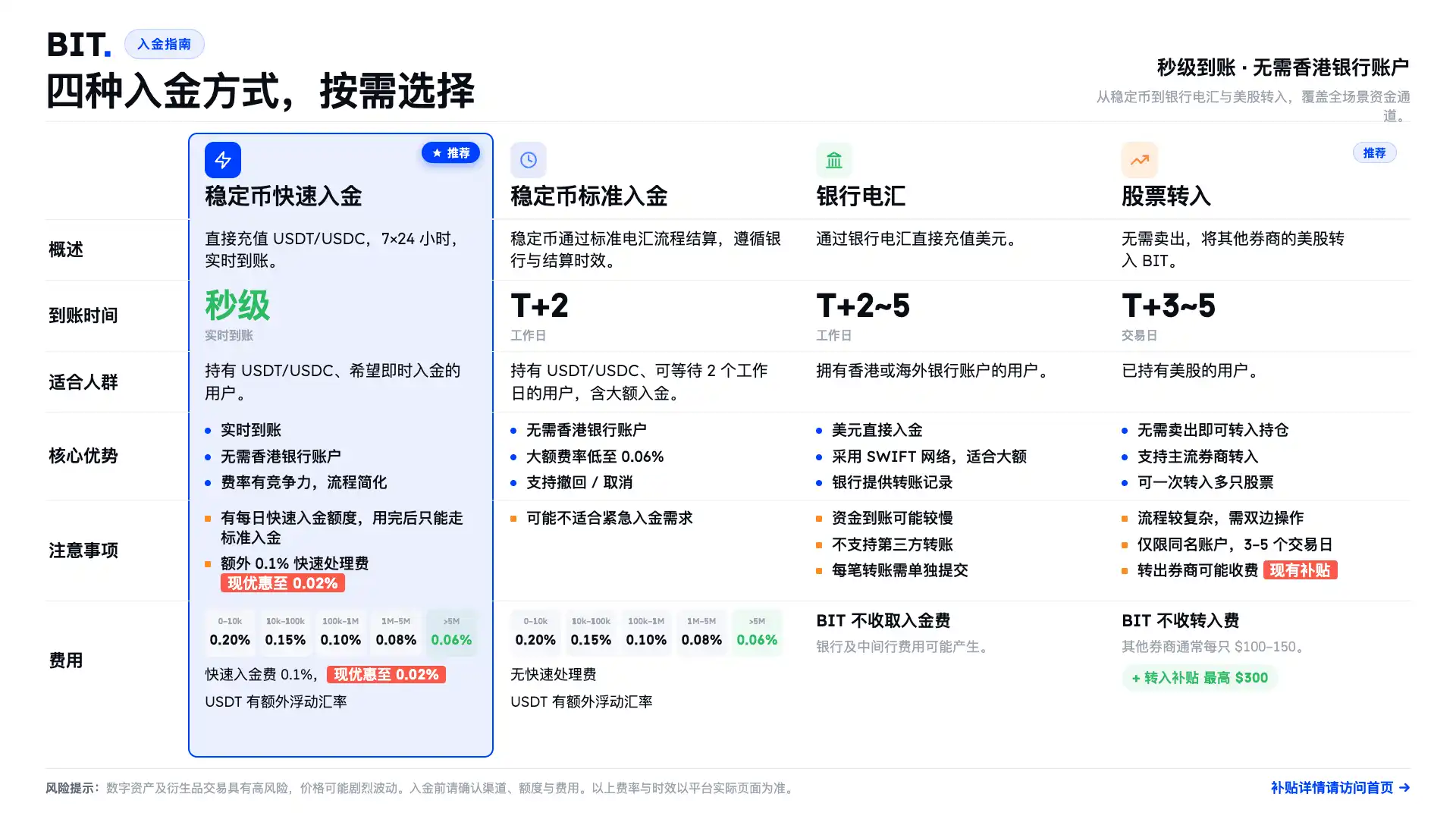
This means that in the money transfer chain, BIT is closer to the actual needs of encrypted users and U.S. share users. Users can use the USDT, USDC to make a fast transfer of a stable currency to achieve a 7x24 hour, second-rate entry; they can also choose the currency stabilization standard to be transferred and settled through the regular wire transfer process; or they can charge the dollar directly through the bank if they have an offshore bank account。
MORE SPECIFICALLY, BIT ALSO SUPPORTS STOCK TRANSFERS. IN OTHER WORDS, USERS WHO ALREADY HOLD A UNITED STATES SHARE IN OTHER VOUCHERS NEED NOT HAVE TO SELL THE STOCK FIRST, TRANSFER THE MONEY OUT, BUY IT BACK, BUT SIMPLY TRANSFER THE ORIGINAL UNITED STATES STOCK HOLD TO BIT。
How much did you miss when you bought the map shares
although the encryption trading platform for us stock is now on the line, it basically solves the problem of "failure of past crypto users to enter the us stock market". but the new problem is that, in fact, many users do not know that, on the various large encryption platforms, they buy themselves more as map shares than as real ones。
MAP SHARES AND REAL EQUITY SHARES, WHICH ARE NOT OBVIOUS AND ARE NOT ALWAYS EASILY IDENTIFIABLE ON THE INTERFACE. ALL YOU CAN SEE ARE NVDA, AAPL, MSFT, A K LINE, A BUY-IN BUTTON AND A CHANGE IN EARNINGS AND LOSSES IN ACCOUNTS。
This distinction is not necessarily striking when dealing in short-term transactions. As long as prices are on track, liquidity is good and deals are made, many will not ask what the bottom is. But once the goal of the user is not to "do a business" but to "assemble an asset", the difference becomes great。
Because the true holding of shares means that users are entering more than just a price system, they have more rights. This includes dividends, voting, corporate action, securities custodianship, liquidation and collection, and investor protection in extreme cases. A price contract can replicate the rise or fall, but it is difficult to fully replicate the stock as the chain of rights behind the securities asset。
So you bought it on most of the encrypted trading platforms, and it's not actually "held it."。
This is the most interesting watershed for discussion when the encryption platform entered the US stock market in 2026。
The most intuitive example is the red。
U.S. stock isn't just going up and down. In the long-term gains of many companies and ETFs, dividends are an important component. Fidelity statistics show that, in the long run, dividends contribute about 40 per cent of total returns to S&P 500。
We'll take $1 million for a few specific cases. It'll be more intuitive。
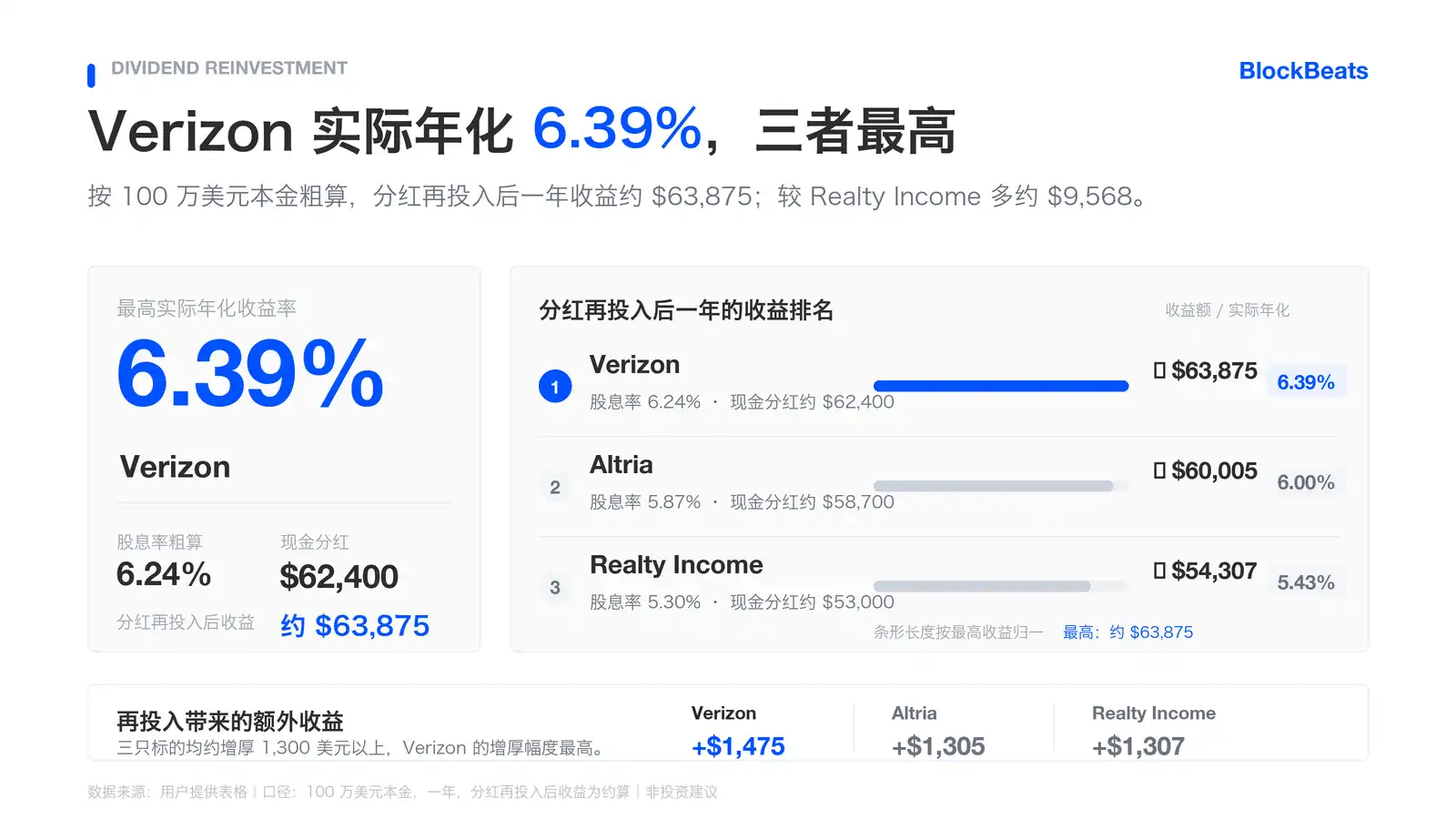
For example, there are some high dividends. Altria's annualization is about $4.24 per share, at crude stock prices in early June 2026, $1 million is held for one year, and pre-tax cash is about $587 million, corresponding to an annual red rate of 5.87 per cent. Verizon has an annualized share of approximately $2.83 per unit at the latest quarter, and the same $1 million is held for one year, with a pre-tax cash split of about $6.24 million, corresponding to an annual red rate of about 6.24 per cent. Realty Income, a monthly split company, has an annualized share of approximately $3246, $1 million held for one year, and a pre-tax cash split of approximately $53,000, corresponding to an annual rate of 5.3 per cent and distributed on a monthly basis。
It's just the result of showing the dividends。
If these dividends are not removed, but rather continue to be bought into the same stock, the yield will be higher. Pre-tax, unchanged equity, non-removable red, red-red-on-the-books round-up, $1 million bought Altria, and one year later earned about $60 million in dividends and reinvestments alone, corresponding to a return of about 6 per cent; Verizon re-invested about $6.39 million per year, corresponding to a return of about 6.39 per cent; and Realty Income had a higher rate of re-investments, with a return of about $5.43 million per year, corresponding to a return of about 5.43 per cent。
Even if it were replaced by a more familiar technology unit, the red rate was less exaggerated than a high-equity stock, but the difference remained. Young Weida is now more like a growth unit, with a low red rate, with $1 million held for one year, with a pre-tax bonus of approximately $4900, corresponding to an annual red rate of around 0.49 per cent; Microsoft is more mature, with $1 million held for one year, with a pre-tax red rate of about $8,700, corresponding to an annual red rate of about 0.87 per cent. These figures appear to be less visible than high dividends, but they are still part of real equity gains。
(It should be noted that different platforms may have different calibres when showing a red rate. Some platforms use Dividend Yield, i.e. divided by stock price after current or newer years of classification; others use Dividend Yield TTM, i.e., the current stock price has actually been divided by the current price by the actual dividends for the past 12 months. So the same stock, the red rate observed on different platforms, may vary. The above measurements are primarily intended to indicate the level of cash flow and are based on a crude calculus after annualization at the current level of dividends
For many asset-based funds, the attractiveness of such equities is not just stock prices, especially when the size of the funds comes to $1 million, $10 million, or even more, the dividends are no longer “small money” but very large and constant cash flows。
This is also the difference between price mapping and real asset paths that are most easily ignored。
IF THE USER HOLDS REAL SHARES IN A SECURITIES ACCOUNT, THE DIVIDENDS CAN BE ENTERED INTO THE PORTFOLIO THROUGH COMPANY ACTIONS AND VOUCHER ACCOUNTS; IF THE USER BUYS A MONETIZED STOCK, A CFC OR A PRICE MAPPING PRODUCT, THE DIVIDENDS ARE REFLECTED IN THE PRODUCT RULES. SOME PRODUCTS MAY REFLECT THE ECONOMIC EFFECTS OF THE DIVIDENDS THROUGH NET-VALUE ADJUSTMENTS, PRICE AMENDMENTS OR OTHER MECHANISMS, BUT THIS IS NOT THE SAME AS CASH DIVIDENDS RECEIVED IN SHAREHOLDER ACCOUNTS。
In addition to the dividends, another easily overlooked difference is the silo。
MANY OF THE UNITED STATES STOCK PRODUCTS ON CEX ARE MORE ESSENTIALLY A PRICE OPENING PROVIDED WITHIN THE PLATFORM. USERS CAN BUY, SELL AND SEE CHANGES IN EARNINGS OR LOSSES CLOSE TO UNITED STATES EQUITY PRICES, BUT SUCH PRODUCTS USUALLY DO NOT SUPPORT THE TRANSFER OF WAREHOUSE POSITIONS TO OTHER VOUCHER OR HOSTING ACCOUNTS. IN OTHER WORDS, IF THE USERS WISH TO LEAVE THE PLATFORM, THEY OFTEN HAVE TO SELL IT FIRST, THEN TRANSFER THE FUNDS AND THEN BUY IT BACK ON ANOTHER PLATFORM。
This is not the same thing as holding stock in real American stock accounts. Real shares can be converted because they have a clear chain of securities accounts, trusteeship and clearing. Assets are not simply a series of accounting figures that exist within the platform, but can be migrated within a compliance security system。
BIT SUPPORTS THE REPOSITIONING, WHICH IS ALSO THE CENTRAL REASON: THE BOTTOM OF ITS AMERICAN STOCK PRODUCT IS NOT SIMPLY A PRICE MAP, BUT IS BASED ON REAL AMERICAN STOCK ASSETS AND CORRESPONDING SECURITIES HOSTING STRUCTURES. THEREFORE, THE USER DOES NOT HOLD A PRICE CONTRACT THAT CAN ONLY BE BOUGHT AND SOLD WITHIN THE PLATFORM, BUT RATHER A UNITED STATES SHAREHOLDING WITH MORE COMPLETE ASSET ATTRIBUTES。
This difference may not be apparent in daytime transactions, but it is critical for long-term configurations. The larger the fund, the longer the holding cycle, the more the user needs to care about one thing: Whether the asset could be removed from the platform, whether it could go into another hosting system, and whether it could be relocated and managed like real securities assets。
Of course, the more complete the rights, the higher the demands on the platform。
THE MECHANISM BEHIND THE STAGE, BIT
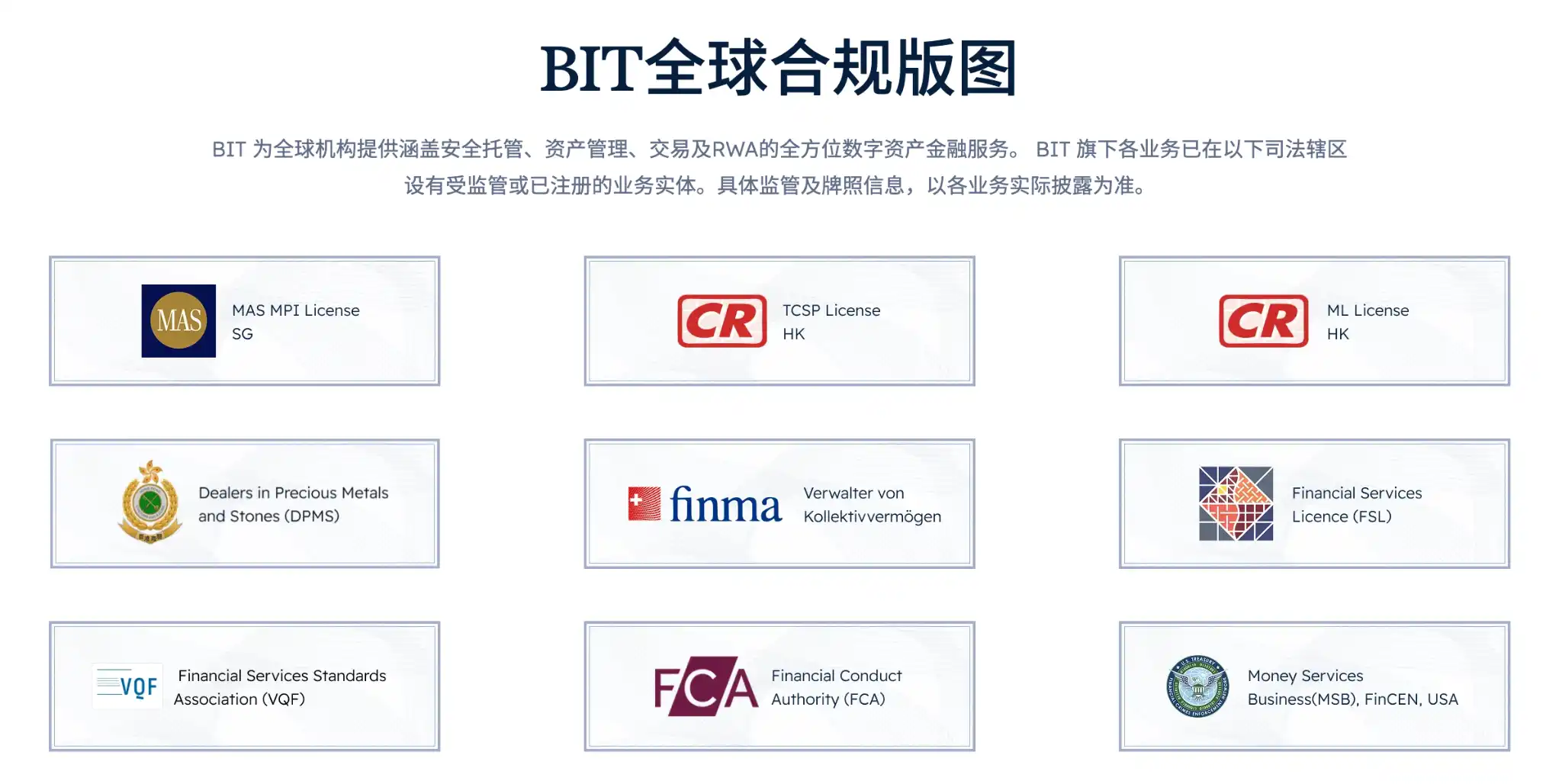
According to BIT, its United States share business does not make equity a price contract within the platform, but rather allows users to enter the United States stock trading and clearing system through Matrix Gelephu and United States holders and clearing partners. The information disclosed by BIT refers to relevant partners in the United States, such as RQD Clearing, AtomicVaults Securitys, who also disclosed the DTC repositioning path。
THE CORE SET OF INFRASTRUCTURE IS CALLED DTCC IF UNITED STATES STOCK TRADING IS TO BE DISMANTLED TO A SPECIFIC MODE OF OPERATION。
DTCC IS NOT A NAME THAT ORDINARY USERS ARE EXPOSED TO EVERY DAY, BUT ALMOST EVERY POST-PROCESSING OF A UNITED STATES STOCK EXCHANGE DOES NOT BYPASS ITS SUBSIDIARY SYSTEM. DTC IS RESPONSIBLE FOR THE CENTRALIZATION OF SECURITIES. IN SHORT, UNITED STATES STOCKS WOULD NOT MOVE BETWEEN BUYERS AND SELLERS LIKE PAPER CERTIFICATES, BUT WOULD BE TRANSFERRED ELECTRONICALLY IN THE DTC SYSTEM. ACCORDING TO DTCC DISCLOSURE IN JUNE 2025, THE DTC HOSTING ASSETS HAVE ALREADY EXCEEDED $10 TRILLION。
NSCC is responsible for liquidation. It deals with a large number of broker-to-broker transactions, including stocks, ETFs, corporate debt, municipal debt, and ADRs. The annual DTCC 2024 report shows that NSCC processed transactions amounting on average to $2219 trillion per day. More importantly, NSCC will compress the large number of sales orders in the market into fewer obligations for the delivery of funds and securities through multilateral netting. DTCC itself disclosed that NSCC can reduce, on average, about 98% per day of the amount of payments to be exchanged。
The key mechanism in this is called CCP nonation. The original transaction was that the buyer and the seller bore the risk of each other: the buyer feared that the seller would not deliver the stock and the seller feared that the buyer would not pay. After entering the central clearing system of the NSCC, the NSCC will become the middle central counterpart, and the legal relationship will change from "buyer-to-seller" to "buyer-to-seller". That is to say, NSCC stands in the middle, turning numerous bilateral credit risks in the market into more standardized, manageable liquidation risks。
That's why the United States stock market can take on such a huge volume of transactions。
OCC IS PRIMARILY RESPONSIBLE FOR THE LIQUIDATION OF DERIVATIVES SUCH AS OPTIONS, WHILE FICC IS RESPONSIBLE FOR THE LIQUIDATION OF FIXED-INCOME PRODUCTS SUCH AS UNITED STATES TREASURY, INSTITUTIONAL AND MBS. FOR ORDINARY STOCK TRADING, OCC AND FICC ARE NOT NECESSARILY DIRECTLY FELT BY USERS, BUT TOGETHER THEY FORM THE BACK-END INFRASTRUCTURE OF US CAPITAL MARKETS. THE FRONT END IS A BUY-IN BUTTON, WHICH IS IN FACT A WELL-DEFINED SET OF FINANCIAL MACHINES。
For the encryption platform, entering the system is like re-learning a language。
the crypto platform is familiar with wallets, blends, chain addresses, permanent contracts, financial rates and internal accounting of the platform; the United States equity market is familiar with broker-dealer, clearing broker, DTC, NCCC, SIPC, account structure, corporate action and liquidation。
Both systems deal with assets and transactions, but the underlying logic is different. The former is more like a real-time book, while the latter is more like a property rights system that combines law, accounts and intermediaries。
so, the hard part about real-american equity is not whether it's business or whether it can make a buy-in button, but how the platform accesss the broker and clearing systems。
In traditional securities markets, there are approximately several models of voucher access to liquidation. The first is self-claring, where the issuer becomes a liquidator himself and handles the back end of the transaction, which requires capital, systems, compliance and wind control capabilities. The second is a fully-discreted introducing broker, where the issuer is in charge of the customer and the front end, and the liquidator opens a disclosure account for each client, handles hosting and liquidation. The third is the integrated account structure used by the platform or introducer at the clearing house, where the bottom customer records are maintained by the introducer. The fourth is DVD/RVP, i.e., comprehensive vers payment/received vers payment, which is more used for the arrangements for the transfer of securities between institutional customers and the custodian bank。
for a crypto primary platform, direct self-claring is hardly the most realistic first step. a more feasible path would be to connect user access, securities account, transaction execution, clearing custodianship through the mature bonding and clearing structures of the united states securities market. in other words, instead of rebuilding itself into an american stock market, it is putting crypto users on the financial track that already exists in the us stock。
That is why compliance and liquidation have become the most important components at this stage when the trading platform collectively embraces “United States equity flows”。
For ordinary users, the specific mechanisms behind these "stages" are not necessarily perceived. The first time the user saw it, it might still be possible to buy it, get it fast, how much it costs, and how well the App works。
But when US equity moves from short-term to long-term asset allocation, the legitimacy of the mechanism becomes important。
Because of long-term holdings of a stock, users are concerned not only with how much it has risen today, but also about whether it is or not their own asset, how the dividends and corporate actions are dealt with, where the securities account is, who is responsible for hosting and liquidating, and, in extreme cases, what mechanisms are available to protect assets。
This is also the BIT core trade-off for US stock: it really wants US equity to be part of the crypto user asset configuration, not another game that can leverage to catch up and fall。
"Genetic Extension" from Matrixport to BIT
"We've made a very firm choice since the end of last year when we were preparing the product. This choice comes from the genes of the company itself, seven years of service providers and high net value customers, and from the value orientation of permanence."
As the head of BIT Brokerage's business, Elio Cui, said at a recent round table, BIT chose this product line, which is inextricably linked to its past corporate genes。
If only this year's U.S. stock business, BIT can be easily understood as a new platform that suddenly enters the C-end market. But by stretching the time line, logic is much clearer. The BIT is a new brand upgraded by the Matrixport brand, which began in 2019 with long-term service providers and high net-value clients, covering such areas as hosting, transactions, asset and wealth management, liquidity and finance, and RWA。
AT PRESENT, BIT MANAGES ASSETS ON A SCALE OF OVER $6 BILLION, WITH A MONTHLY TURNOVER OF OVER $7 BILLION, ACCUMULATED INTEREST PAYMENTS TO CLIENTS TOTALLING OVER $2 BILLION, VALUED OVER $1 BILLION, AND HAS BEEN ELECTED TO THE 2024 HURUN GLOBAL UNICORNS AND THE 2025 SINGAPORE FINANCIAL SCIENCE AND TECHNOLOGY UNICORNS。
Even better known, the co-founder and chairman of the BIT, Wu Zhuang, is also the CEO and Chairman of the Bitdeer Deer。
BIT IS NOT A TYPICAL TRAFFIC-TYPE TRADING PLATFORM。
In the past, it had faced more clients than institutions, professional investors and high net value users. The product requirements of such a group of customers are often different from those of the bulk trading users. Of course, they also care about the proceeds, but more about where the assets are, who is hosting, how the risks are segregated, who is the counterparty to the transaction, whether the account structure is clear and whether the compliance boundary is clear。
Big clients are less likely to be moved by the word "high returns". They are more concerned about whether the problem can be traced, whether ownership of assets can be confirmed and whether the bottom processes can be explained. Slower is not a disadvantage for them. Too often, slow itself is part of wind control。
THAT'S THE PRODUCT PHILOSOPHY BEHIND THE BIT-US BUSINESS。
If a company's genes are blended, leveraged, flowing and trading dynamic, it naturally chooses a lighter path when it enters the United States stock market: making it into a fast-tradable price product. This would be more like a trading platform and would make it easier to generate short-term transactions。
But if a company’s capacity is more in terms of institutional financial services, its entry into the US stock is not just about “how to get the user to trade” but about “the way in which this asset should be held.”。
The two lines of thought are not absolutely high, except that the demand for services is different。
Transaction-type users want speed, volatility and accessibility. Configure users want clarity, stability and certainty in the asset chain。
The U.S. shares are particularly suited to this perspective. The shares of United States-listed companies are assets that combine corporate profits, cash flows, governance structures and shareholder interests. For long-term configurations, the purchase of a stock is not just a fall and fall today and tomorrow, but a part of the future value of the company。
IN THE ENCRYPTION MARKET, THE PLATFORM IS GOOD AT TRADING EVERYTHING. BTC CAN TRADE, ETH CAN TRADE, GOLD, US STOCK, INDICES, MACRO EVENTS. THIS CAPACITY IS STRONG AND ALLOWS GLOBAL FINANCE TO REACH ASSET PRICES FASTER. BUT IT ALSO HAS A SIDE EFFECT: PRICES ARE MAGNIFIED AND RIGHTS ARE WEAKENED。
AND WHAT BIT WANTS TO DO IS BRING THIS PART BACK。
This explains why their American shareholders hit the "real hold" "shareholders' rights" "the straight company". Rather than creating a more volatile trading ground, it wanted stable currency users to enter the most mature, dominant class of assets in traditional markets more smoothly。
Slow is fast
in the crypto industry, fast is usually a virtue. a new narrative comes out, the platform comes out fast; a new asset goes up and down; users want in and out, and the market rewards speed, volatility and responsiveness. it is the most familiar language in this industry that is 100, thousands, thousands, thousands and thousands of times。
So it doesn't sound so sexy when a encryption platform says it's going to be real American stock, real securities accounts, real clearing systems。
For a encryption platform, the fastest option is, of course, price entry. The price of the United States shares is brought in to make a trade match, token or contract, and the product can run quickly. Users have become accustomed to spotting, durability, leverage, money rates and 24-hour trading on trading platforms, a path that is natural and easy to generate volume in a short time。
But financial products end up returning to user experience, especially at critical moments。
As stated at the beginning of this paper, the night SpaceX was listed is a good example. Hot IPOs come on a temporary basis, many of the platforms are popular and users are spending time, attention and even money waiting for results. However, if they do not eventually receive their share, they can only be refunded, and users lose more than just a buy-in opportunity, as well as the time and opportunity costs spent while waiting. The market is not suspended because the user is waiting, and the real trade window is often those hours。
And that's why, stable, reliable and enforceable, is more important than "looks fast"。
BIT's path is more like a steady and reliable opportunity for users than it is when IPOs are promoted and investors are disappointed. On the night of SpaceX's listing, the BIT system was functioning steadily and users could participate in pre- and formal transactions through the real US stock trading portal; many of the investors who bought in front of the drive also seized the opportunity offered by the first-day price discovery。
In a fast-paced industry, slowing down accounts, clearing, hosting, compliance and real asset paths does not seem to be high enough. But much of what is really important in finance is not done in posters and propaganda, but in the details of whether an order can be made, whether assets can be identified, whether the system can withstand pressure and whether users can actually participate in the market during the window。
The larger the funds, the more the speed; the longer the configuration, the more the yield cut-off. The real concern of institutions and high net value clients is where assets are located, how rights are recognized, how risks are segregated and whether they can be traced。
THIS IS PROBABLY THE PATH THAT BIT US EQUITY REALLY WANTS TO EXPRESS: INSTEAD OF CREATING A US EQUITY PRICE ENTRY IN THE FASTEST WAY, IT IS BRINGING STABLE CURRENCY USERS INTO THE REAL US EQUITY ASSET SYSTEM IN A MORE SOLID WAY。
Slow is fast。
This material is intended only for general information and market educational purposes and does not constitute any investment proposal or offer, solicitation, recommendation or endorsement of any securities, product, platform or service. United States equity investments involve market, liquidity, hosting, clearing and receipt risks, which investors should carefully assess according to their own circumstances and seek professional advice as necessary。
