
Will the next round of encrypted cattle markets start with a deal on SpaceX's chain
Deposition of currency narratives, real assets and financial infrastructure
Original title: Cripto 2029
Photo by Lukas
Photo by Peggy Block Beats
The editor predicts the structural changes that may have occurred in the encryption industry in 2026-2029, using the "year by year" approach。
The author is more concerned about the bottom of the question than he continues to discuss the narrative of a mountain currency, a certain chain of ecology, or whether AI x Cripto will explode: Where does the true value of the industry flow when encryption is no longer just an asset class but begins to become a private asset transaction, chain settlement and traditional financial back-office infrastructure
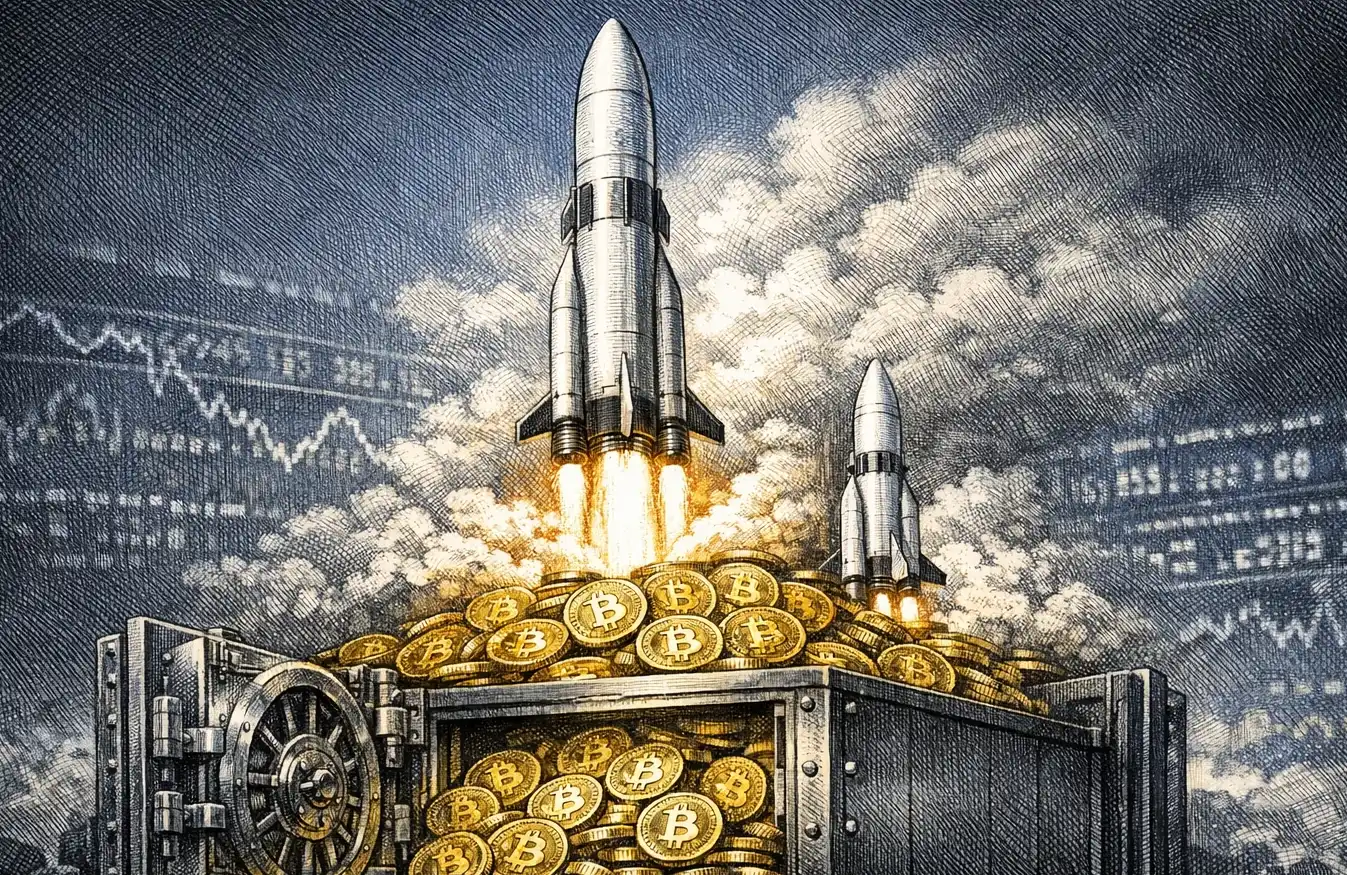
The central judgement of the article is that the main line of the encrypted market in the coming years will shift from a "currency narrative" to a "real asset portal". In 2026 SpaceX, OpenAI, Anthropic and other pre-IPO contracts on platforms such as Hyperliquid may become an entry point for markets to pursue high-quality private assets; AI x Cripto is perjured in most directions, and the only cross-section that really emerges is the forecast market. By 2027, the Public Chain Foundation will be forced to reposition itself between casino-type retail transactions and institutional compliance infrastructure, and the share of stabilization currency, tokenization of private fundraising credit and funds will continue to grow, but at a pace bound by political and regulatory variables。
The real turn could have happened after 2028. According to the authors, with the liberalization of the threshold for eligible investors and the gradual opening up of secondary markets for private securities, real private equity will begin to replace the unsettled synthesis as a core asset in the new round of cattle markets. In other words, the flourishing of the pre-IPO contract for sustainability is not the end, but the alternative to the market when the legal private asset channel is missing. Once real equity can be traded more broadly, synthetic assets are transformed from protagonists to accessories。
by 2029, the encryption industry may become more "difficult" but more important: stable currency and chain settlements become part of the traditional financial backstage, and ordinary users are not necessarily concerned about whether the bottom is running on the public chain; truly valuable token must respond to real cash flows, enforceable interests, or clear value capture mechanisms, and those tokens that have no bottom assets, no claims, and no income chains will no longer go through long periods of time, but will simply lose their trade significance。
The most interesting aspect of the article is not whether it accurately predicts each year, but rather whether it presents a clear test variable: the key to the next round of cattle markets in the encryption industry is probably not a technical bottleneck, but a legal gateway. If, by the end of 2028, the demand for private companies by the diaspora is still expressed only through offshore synthesis of durable and packaging products, the author ' s judgement will need to be reassessed; but if private assets really begin to enter the wider market in a compliant manner, the core narrative of the encryption industry will be rewritten accordingly。
The following is the original text:
You're sitting in front of the biggest change in encryption history. If you want to stay in the industry, you have to see what's happening right now。
The industry now has three core issues:
What makes a token worth it
How do we translate different technology frontieres into block chains
What happens when encryption ceases to be an asset and becomes a traditional financial infrastructure
I can discuss every issue in abstracto. Many do so every day, and these arguments never come to a conclusion。
So I want a different way. I'll write down what I think will actually happen to this industry from now until 2029. I'll give you names, numbers and dates that are specific enough to get you back in three years to check if I'm right. This is just one of many futures, some of which must be wrong. But vague judgements about the future cannot be perjured, nor can they be perjured. I'd rather be specific and wrong than vague and safe。
This projection comes from my position: I'm at the intersection of encrypted start-ups, regulation and venture capital investments, which are shared weekly with alternative asset managers and capitalists. This certainly does not mean that I must be right, but it means that my judgement is priced under real constraints。
Mid-2026: The only good asset is not a token
IN MID-2026, BEFORE EVERYONE AGREED ON "HOW MUCH A TOKEN SHOULD BE WORTH," THE IPO MARKET FOR THE RENEWAL OF CONTRACTS HAD BEEN THE FIRST TO FIND A PRODUCT MATCH。
It starts with Hyperliquid. SpaceX’s permanent IPO contract, initially mocked by a large Ventuals liquidation manipulation, became the most interesting price signal in private and open markets. By July, banks and hedge funds began to refer to it to value their private holdings, and consumer-end applications such as Robinwood were used to calibrate post-IPO pricing. In the weeks leading up to every major listing, these lasting contracts have shrunk with embarrassing accuracy to open prices — not the market, but the undersellers who charge seven digits and eventually arrive at the same number. OpenAI and Anthropic's lasting contract attracts a larger amount of unwinding. In a short period of time, an encrypted primary exchange became the closest place to real-time prices for the world ' s most important private companies。
AT THE SAME TIME, THE OCCUPANT IS ASKING A MORE BASIC QUESTION: WHY IS THERE SOMETHING ELSE IN THE CHAIN WORTH TRADING? OVER THE PAST 18 MONTHS, THE MARKET HAS BEEN BLEEDING, THE FOUNDERS AND THE FUND HAVE WITHDRAWN THROUGH DAT AND TWAP, AND THE ONLY CURRENCY THAT HAS A VALID CATCH RING HAS WON EVERYTHING. A DOZEN VALUE CAPTURE MECHANISMS HAVE BEEN PROPOSED, BUT MOST HAVE NOT ACTUALLY TAKEN OFF BECAUSE THEY HAVE THE SAME FLAW: THEY ARE ATTACHED TO WORTHLESS COMPANIES. THE INDUSTRY HAS RESOLVED "HOW TO CAPTURE THE VALUE OF THE TOKENS" BUT HAS NOT ACQUIRED ANY ASSETS WORTH BEING CAPTURED。
THIS REVERSE IS EXACTLY THE QUIET ENGINE BEHIND THE PRE-MARKET BOOM. DEMAND WAS NEVER FOR THE CONTINUATION OF THE CONTRACT ITSELF, BUT FOR QUALITY ASSETS. IN 2026, THE ONLY HIGH-QUALITY ASSET AVAILABLE IN THE CHAIN WAS THE SYNTHETIC INTEREST OF COMPANIES THAT HAD NOTHING TO DO WITH ENCRYPTION。
END OF 2026: AI DOES NOT NEED ENCRYPTION
Anthropic and OpenAI have reached technology flight speed, and the battle for basic models has begun to make AGI market-pricing. One consequence of this is that, with the exception of Core Basic Models, all those working in this area are starting to bleed. Capital began to price AGI to something on a company's balance sheet, not an ability to be commodified and benefit everyone around it。
In this environment, AI x dies silently encrypted. Not because it was rejected, but because there was no time for it. x402 paid on-line but no payer was found; the Agent economy, which was said to require a chain currency, did not arrive on a large scale; and the few that actually existed were settled in United States dollars through API, like all software in the past. The most honest mood in the world at this time is that AI doesn't need encryption, and venture capitalists finally stop pretending it needs it。
THE ONLY AI X-ENCRYPTED PRODUCT THAT REALLY FITS THE PRODUCT MARKET IS THE FORECAST MARKET. THE PREDICTION OF THE BASE MODEL LEADS TO FLIGHT SPEED, AS THEY ARE THE MOST ACCURATE FINANCIAL INSTRUMENT FOR EXPRESSING THE QUESTION "WHO HAS THE STRONGEST MODEL IN A MONTH'S TIME" AND THE PROBLEM ITSELF IS DRIVING THE LARGEST AMOUNT OF CAPITAL ALONE。
And beyond that, something that's not so interesting is happening. After passing through the Senate in mid-2026, Clarity Act was considered by most traders as "no influence" because the market did not rise immediately. By the end of 2026, however, the monetization project was accelerating. Large asset management companies are moving from pilots to production environments, as “low-key” is the responsibility of their compliance departments: money market funds, private credit, and the modest but important middle ground on balance sheets. They don't trade, they don't have price charts, and they don't have KOL on CT to send a transfer agent file with passion。
BY THE END OF 2026, THE ENCRYPTION INDUSTRY HAD FORMED TWO ALMOST NON-RECOGNIZED ECONOMIES. A LOUD, PRICED AI COMPETITION; A QUIET, BEING ABSORBED BY THE FINANCIAL SYSTEM IN A FILE. ALMOST EVERYONE'S WATCHING FIRST。
At the beginning of 2027: the Foundation selects the sides
The generic public chain can no longer remain ambiguous。
Over the years, each major foundation has been telling two stories at the same time: consumer-level adoption on stage and institutional preparedness in the data room. These two stories never needed to meet face to face. But by early 2027, they met。
CONSUMER NARRATIVES ARE HIGHLY CONCENTRATED AT THE LEVEL OF TRANSACTIONS: THE ONLY RETAIL PRODUCTS THAT REALLY FIND DEMAND CONCENTRATES ON A FEW LOCATIONS. AT THE SAME TIME, CORPORATE NARRATIVES ARE THE ONLY TRUE STORY OF A FEE-PAYING CLIENT. THUS, ONE AFTER THE OTHER, THE FOUNDATION HAS BEGUN TO TAKE A CLEAR POSITION, AND MOST OF IT HAS MOVED IN THE SAME DIRECTION: CORPORATE SALES TEAMS, COMPLIANCE SUPPORT, INTERNET-WIDE COMPLIANCE FOR TOKEN TRANSFER AGENTS AND BROKER LICENCES, SDK, WALL STREET RELATIONS, AND PRIVACY FUNCTIONS。
EACH TURN WILL BE INTERPRETED IN THE SAME WAY BY THE MEDIA AND CT: THIS IS AN OPTION - INSTITUTIONS TAKE PRECEDENCE OVER CONSUMERS AND SERIOUS CUSTOMERS TAKE PRECEDENCE OVER CASINOS。
Within the Foundation, however, there is little real confidence in the framework. They're actually adding consumer-level encryption to another angle. The threshold for eligible investors has been relaxed for many years and the number of eligible persons has been expanding. This means that the "institutional products" for which the Foundation is building are simply a little delayed product to consumers, who have not yet been named as such. Those who set the tracks knew that, but nobody would put it in the bulletin. The team that built the compliance infrastructure would talk about banks, which are the ones who pay now。
But that quiet economy at the end of 2026, it now has something that was never owned before: future retail customers. Two almost non-recognized economies now share a thin film, which is a qualified investor audit。
Mid-2027 to end 2027: triple smallpox Board
A new generation of companies has turned private markets into fanatics again. Bio X-AI, Physical AI, human robots, financing wheels are oversubscribed, valuations are up vertically, and each company has been on the market for many years. The durability contract platforms will be online in a few weeks; some companies with little or no revenue will have record composite balances. The 2026 model focuses on re-emergence with a higher bet: the world's most desirable assets are in the private market, and the only version you can touch is with an eight-hour one-hour rate。
Real assets now exist and grow in a consistent manner in the private market: through proven channels, each season is profitable and invisible in a flow of information that only responds to vertical lines. There is a clear reason for the gap between it and the growth rate of successive contracts: private securities cannot be publicly promoted in general. As a result, the only distribution engine in the encryption industry that is truly in control — the distribution of a chart and the ensuing influx of people — is not legally capable of touching this asset class. At the same time, the durability contract itself has its own ceiling and is structural: a dilatory contract requires a catalyst that is close enough to be priced, which limits synthetic assets to late-stage companies listed. Early-stage assets, such as medium-term financing rounds, Bio x AI and robotics, whose names are years away from exit, have no viable synthetic expression. For most parts of the private market, regulated ownership is not a slow alternative; it is the only tool that can exist. It's just that it's not allowed to publicly present itself。
The stabilizer hit another ceiling. Supply continued to rise slowly and never stopped, but expansion plans were shrunk quietly. The mid-term elections changed the configuration of the Commission, and the 2028 general election was taking shape, with several of the most vocal voices being the subject of an election campaign against the private dollar. Laws passed in 2025 and 2026 remain in force, but they are implemented by the Government. Every bank owner who is modelling a 10-year settlement system must now price scenarios where the next Government may be hostile. No one cancelled the project. They just extended the deadline, scaled down the pilot, waiting for November 2028. The speed at which the dollar goes up is exactly equal to that at which political certainty is low in 2027。
The same caution spreads to other parts of quiet economies. The private credit and fund share of monetization continues to be rolled out and continues to fall in the same position: production grade, compliance approval, deliberately small-scale because no one wants to be a case study at next year ' s Senate hearing. The pattern of the three leads is entirely consistent, although for different reasons: the product is valid and demand has been proven, but the oil door is in the hands of what is beyond the control of the industry。
If you look at any chart outside the encryption industry, 2027 is a strong year. It's just that the industry has spent 10 years training itself to read any linear growth as a failure。
2028: Permits are no longer scarce
From here, the resolution will drop. The immediate period preceding this paper is projected on a quarterly basis; the following is projected on an annual basis, with corresponding increases in the margin of error. Here is a clear assumption: this scenario assumes that the Democratic candidate won in November 2028. In another outcome, the timing of subsequent events will change, but the structure will remain largely unchanged。
Casinos have deflated, with few people marking the exact date. Squeeze machines have become so efficient that they cannot sustain themselves: every new mobile storm in 2026 and 2027 was smaller and dried up faster than the previous one by fewer and more concentrated participants. There was no identifiable crash. Meme's currency storm is still going on, and the chart is still going up vertically in one afternoon, but at some point in the first half of 2028, casinos were quietly no longer the focus of the industry. Its volume of transactions has become a statistical, rather than a culture. Some traders migrated to the forecast market, which inherited that energy; some remained in a shrinking pool; and an alarming number of people did something nobody could have expected in 2026 over the past year: through qualified investor audits。
The retreat of political fear, as it did when it arrived, was a year-round re-pricing exercise. Possible candidates take away industry funds and say the same thing in different accents: regulation, not prohibition. Those who see the previous Government as a squeezing window are beginning to face investigations, while the industry is slowly realizing that clean-up itself is a sign to see, not a signal to see: a government that can distinguish between squeezing and infrastructure is a prerequisite for infrastructure security financing. In 2027, the bank owners of the downgrading pilot began quietly expanding the project before November. By the time the results were set, most fears of premiums had disappeared。
The real lessons of the year come from a market that is visible to all. At the beginning of 2028, in a large trading place, a warehouse sufficient to boost the price of marking began to settle in the most crowded IPO pre-renewal contract. Since Ventuals, this structure has heralded the eventual large-scale arrival of cascades. Billions of dollars were wiped out within hours, the position was automatically deleveraged, losses were socialized and the gains of the winners were paid off. Whether or not this is a manipulation or an accident has never been agreed upon after the event, and this ambiguity itself leads to the conclusion that, in a market without anchors, there is no real price to deviate from, and thus manipulation cannot even be defined, let alone proven. Renewable contracts for open shares are bound by their bottom spot market. But there's nothing under the IPO contract. Real stocks do exist and are traded quietly in regulated premises, but cannot be widely distributed or cited on a large scale, so each mark price is a guess of the place of trade, and guesses can be moved. The cascade was not a synthetic market failure, but a synthetic market that operated in full design in the absence of a real market。
For a decade, the prohibition of public outreach has been defended as investor protection. The ruins prove that they keep people away from the enforceable version of the deal, but leave them alone in a leveraged, anchorless version. The truly important dividing line has never been synthesis and truth, but is enforceable and unenforceable。
The post-negative relief does not look like a reform, more like market pipeline engineering: the regulatory guidelines that allow public solicitation of private securities reselling — a secondary market, not a first-level financing — are directed at a certified and expanding group of qualified investors. Logic is almost boring: the synthetic market needs an anchor, and the cheapest anchor is a market that is real and where people are allowed to know its existence. A 90-year-old rule of speech was narrowed down one afternoon as a derivative restoration programme。
The first week of meme coins is repeated, except the chart corresponds to the real company. Re-sale hangars were issued, intercepted, disseminated and, for the first time in the history of this asset class, legal. Interlocution divides once: half the time line calls it the new original language, while the other half questions whether the bulk has just turned into windfall exit mobility. The latter half of the intuitive feeling is right, but it is wrong in the times — when assets are simply coins attached to empty things, the problem is reasonable. But now, these are interests in real companies, and it has taken two years to prove that everyone wants them. The first-fired financial flows coincided with the direction that the synthetic market foresaw: companies that were later known to all, and then, because ownership had no financial rate and no catalyst, spread out to front companies that could never be reached by a lasting contract. Continued contracts will not disappear; they will turn into a later annex to a market where they will no longer be required to assume full functions。
By December, the industry had ushered in its own cattle market, which was driven by the oldest saying in finance: something that is now finally allowed to introduce itself。
2029: Market is the only thing to see
THE FIRST FULL YEAR OF THE CATTLE MARKET IS NO LONGER THE SAME AS THE PREVIOUS CYCLES, AND THE DIFFERENCE ITSELF IS THE FOCUS. VERTICALLY RISING ASSETS ARE THE REAL COMPANIES THAT TRULY BUILD THE REAL THING AND ACTUALLY BENEFIT HUMANITY. THE NEW LANGUAGE FOR ORDINARY PEOPLE IS A PRIVATE COMPANY: BIOTECH, WHICH HAS ENTERED THE THIRD ROUND OF CLINICAL TRIALS, ROBOTICS, WHICH ALL HAVE SEEN THE DEMONSTRATION, AND THE AI LABORATORY, WHICH IN 2026 TRADED ITS ETERNAL CONTRACT AND WHICH CAN NOW HOLD ITS SHARES. THE GRADUAL LIBERALIZATION OF THE SYSTEM OF QUALIFIED INVESTORS OVER THE PAST DECADE HAS QUIETLY CREATED A RETAIL CLASS THAT CAN BUY ASSETS THAT ONLY INSTITUTIONS COULD TOUCH FIVE YEARS AGO, AND MOST OF THEM NEVER THINK OF AS "ENCRYPTED"。
The system of tokens is divided along the line proposed at the beginning of this paper. The chains that have become the infrastructure for the settlement and distribution of new markets capture real financial flows, and their tokens are traded as claims against them. Everything else is faced with a market that has become super-literate: a token that has no enforceable interest and no valid value for capturing the rings, and that will not bleed slowly after 18 months — it will not be traded at all. The value capture dispute in 2026 was not won by a mechanism. It was simply phased out following the arrival of a shipment of assets that did not require such debate。
Stabilized coins did what they did every year in 2029 in this scenario: meaningfully compounding growth without a hockey pole outbreak. By the end of the year, the supply was about double that of mid-2027 — it could be said to be increasing by 20 per cent per year. It is not a market failure that limits its ceiling beyond this speed, but rather a continuing policy choice made by the two parties in different terms: private dollar issuances grow at a rate that is both useful and does not compete with sovereign balance sheets. The dollar goes up at the speed of political certainty, which by 2029 is medium and permanent。
Casinos still exist. It operates in the remaining corners of its deflation, occasionally causing storms of approximately the same importance as any other part of the entertainment economy. Its old members are scattered in the forecast market, the new secondary market, and — this is an unforeseeable part of 2026 — the application documents for qualified investors。
The third issue in this paper, namely, the issue of encryption as a traditional financial infrastructure, is resolved in the only way possible: it becomes an issue that cannot be asked again. There were no incidents. Settlements exist in a certain place — a dedicated track, a public chain, or a combination that no one outside an external operator can draw clearly — and ordinary participants are neither aware nor concerned, as if no one knew which clearing house was behind their voucher account. The absorption process, which began at the end of 2026 with a filing document, was eventually completed by disappearing from perspective. Infrastructure wins by getting bored. What remains to be seen is what the industry is actually building at the end of every cycle of pretending to do something else: a market。
So the three questions at the beginning of this paper can be answered in the manner given in this scenario。
What makes a token worth it? The answer is the same as it has always been: an enforceable claim to the real thing, and it is now implemented by a market that is harsh enough to remove all unclaimed assets。
How is the technology front being translated into the block chain? Through the private market. Front companies never needed tokens, they needed places to trade; once they could speak openly, the front line itself was on the market。
What happens when encryption becomes the infrastructure of traditional finance? Nothing will happen. It will be abstracted and the issue will stop。
Some of them must be wrong. It's a deal that was agreed at the beginning. The main line of the article will be pierced by an observation: if, by the end of 2028, the demand for private companies by the diaspora has not yet found a legal path, there is no regulatory easing, no expanded access, and the offshore Synthetic Sustainability Contract and packaging products are still carrying the main financial flow, then the core judgement of this paper — the bottlenecks are in law rather than technology — is wrong, and you should look at what is built on it at a price。
Keep an eye on this variable. The rest, stay until 2029。
I would rather lose concretely than win vaguely。
THIS ARTICLE IS INSPIRED BY AI 2027。
[ Chuckles ]Original Link]
