
Wave Tron Industry Weekly: expected continuation of high interest rates, BTC/ETH Separatization, PAYY and Midas finance reflect payments and revenue infrastructure upgrades Wen
I. Looking ahead
1. Macro-level summaries and future projections
The macro-mainline from 4 to 11 May can be summed up as “stable growth, still stuck inflation, tight policies”. The Fed maintained interest rates at the end of April and emphasized, in a more hawk-oriented presentation, inflationary pressures, in particular the risk of spillovers from rising energy prices; at the same time, non-farm employment in April, published on 8 May, was better than expected and unemployment stabilized at 4.3 per cent, indicating that the labour market remained resilient, but also allowed the market ' s expectations of short-term interest rates to recede further. Adding tariffs and trade frictions between China and the United States, as well as the situation in the Middle East, has pushed up oil prices, and market sentiment has swayed between the “non-recession” and the “fast-falling inflation”。
Over the next week, macro-trading, or still “high interest rates are maintained longer”, will continue to be highly sensitive to inflation, oil prices and trade news; if US inflation data continue to be hotter, the market will strengthen the pricing of “limited interest rate drops this year” and, conversely, the dollar and long-end interest rates will have a clear fall if inflation cools. In general, economic data approximate rates can still support growth narratives, but policy and geopolitical uncertainties will stifle valuation expansion, and equity markets are more likely to manifest themselves in high-level shocks, plate rotations, rather than unilateral upwards。
2. Market changes and early warning in the encryption industry
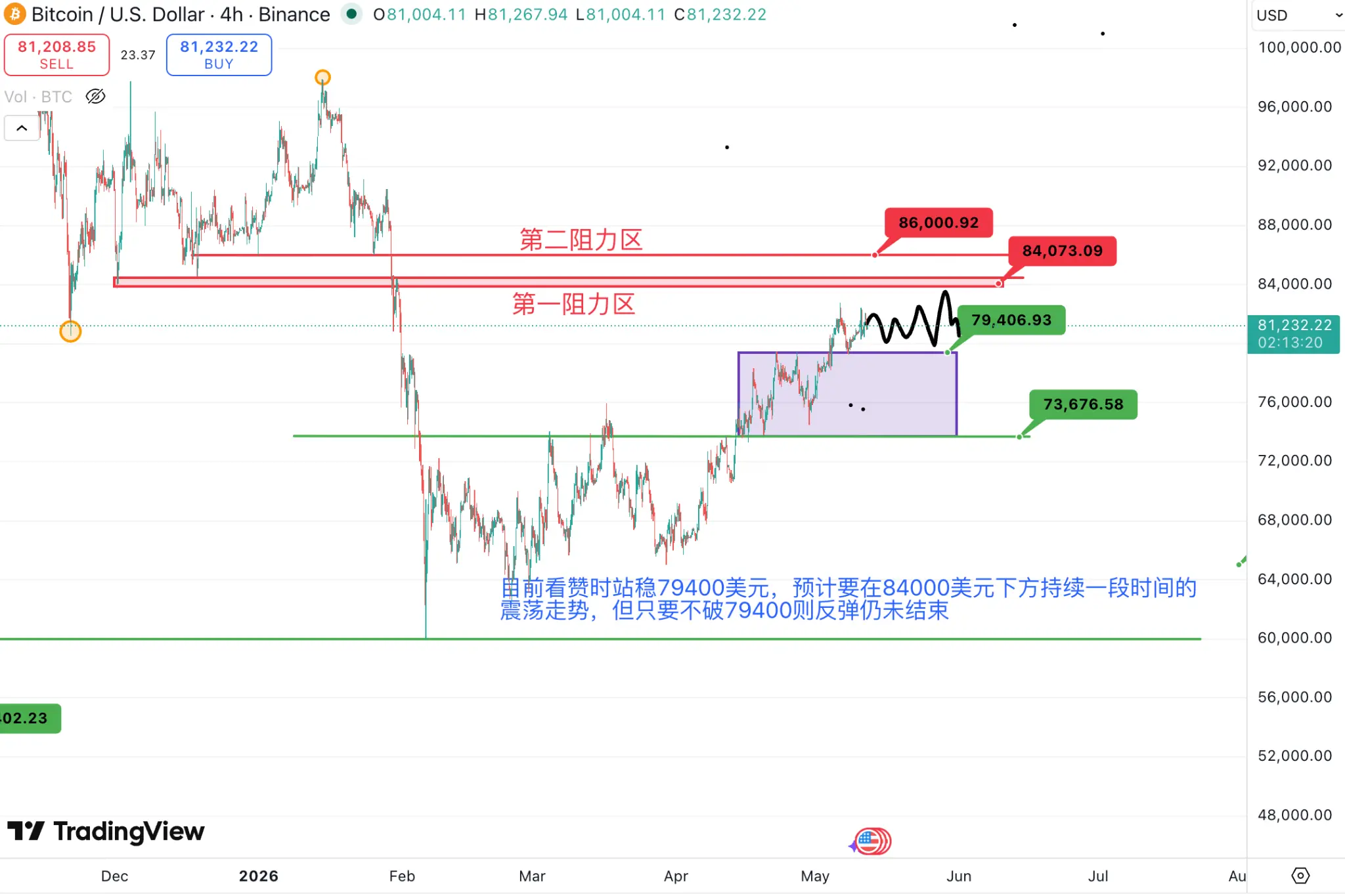
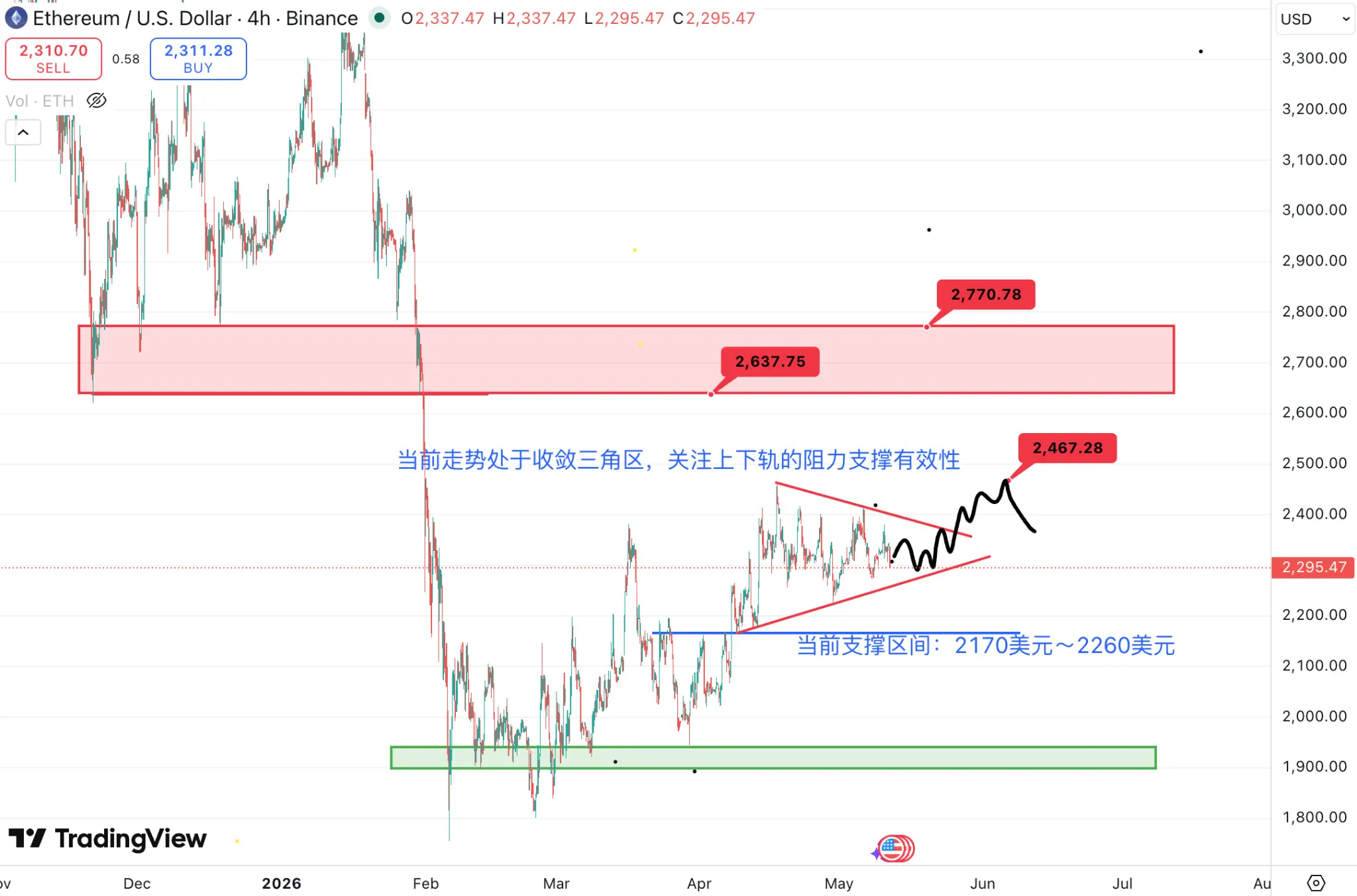
FROM 4 TO 11 MAY, THE ENCRYPTED MARKET AS A WHOLE REMAINED A “HIGH VOLATILITY AND SHOCK” STRUCTURE, WITH BITCOIN AT THE PRICE LEVEL ROUGHLY AROUND $80.0-$82 MILLION, AND CURRENTLY AROUND $8.13 MILLION, INDICATING THAT MANY HEADS DID NOT FALL SHORT OF CRITICAL SUPPORT, BUT THAT OVER-THROWING WAS ALSO MORE PRONOUNCED; THE ETHER WORKSHOP WAS WEAKER, WITH APPROXIMATELY $2310 AT THE PRESENT TIME, WITH A HIGH AND LOW POINT OF APPROXIMATELY $2300-2344, REFLECTING THAT THE REHABILITATION OF MOUNTAIN ASSETS WAS STILL LAGGING BEHIND THE BTC. OVERALL, FINANCE TENDS TO FAVOUR THE DOMINANT CURRENCY OF BETTER LIQUIDITY, AND MARKETS CONTINUE TO ABSORB MACRO-INTEREST RATE EXPECTATIONS, CHANGES IN RISK PREFERENCES AND THE LINK BETWEEN MEDIUM- AND LONG-TERM NARRATIVES AND SHORT-TERM LIQUIDITY PRESSURES AFTER HALVING。
IN THE FOLLOWING WEEK, MARKET-DRIVEN WARNING CONTINUED TO BE “TO SEE IF BTC CAN SECURE THE VICINITY OF $80,000 AND THEN GET BACK ON TOP OF $82,000”. IF THE BTC BREAKS DOWN WITH $80,000 AND DROPS, THE FORTRESS USUALLY ACCELERATES THE FALL; IF IT STABILIZES ABOVE $81,000 AND STARTS AN EFFECTIVE BREAKTHROUGH AT $82,000-83,000, THE SHORT-LINE MOOD IMPROVES MARKEDLY, BUT IT IS MORE LIKELY TO BE A STRUCTURAL REBOUND THAN A GENERAL SURGE. ETH'S KEY VIEWER CAN LOOK AT $2,300 A LINE, LOSE THE CODE AND CONTINUE VULNERABLE, AND IF IT STANDS BACK AT $2350 OR MORE, IT WILL BE POSSIBLE TO BRING BACK SOME OF THE HIGH BETA HILLS。
3. Industry and track hot spots
First Mark casts, DBA and Ventures with PAY, and Midas with RRE Ventures and Creandum votes, Coinbase, GSR, Oasis, and Framework, respectively, represent two very clear main lines in the encryption infrastructure: the former focuses on creating low-cost, efficient chain payment networks, while the latter is committed to linking the proceeds of lower-chain national debt with the liquidity on the chain. Both indicate that current market concerns are shifting from mere transactions and speculation to lower levels of payment efficiency, liquidity and revenue distribution。
Market hot spots and week-round potential projects
Overview of potential projects
The analysis was led by First Mark, DBA and Ventures - building a low-cost, efficient chain payment infrastructure
Introduction
Payy is a stable currency platform with privacy at its core, with default private transactions through zero-knowledge technology (ZK). It provides self-custody wallets and Visa cards that allow users to use USDC seamlessly for payments while maintaining the privacy of their activities in the chain。
Payy is also constructing Payy Network, a second floor of Rollup based on the Ether Workshop, which conceals transaction data through zero knowledge, including senders, receivers and transaction amounts。
Payy has now launched a wallet product, the Internet is on the line and plans to issue token currency, with the aim of promoting the mainstreaming application of privacy stabilization currency payments。
Brief description of the framework of the agreement
Payy Network structure
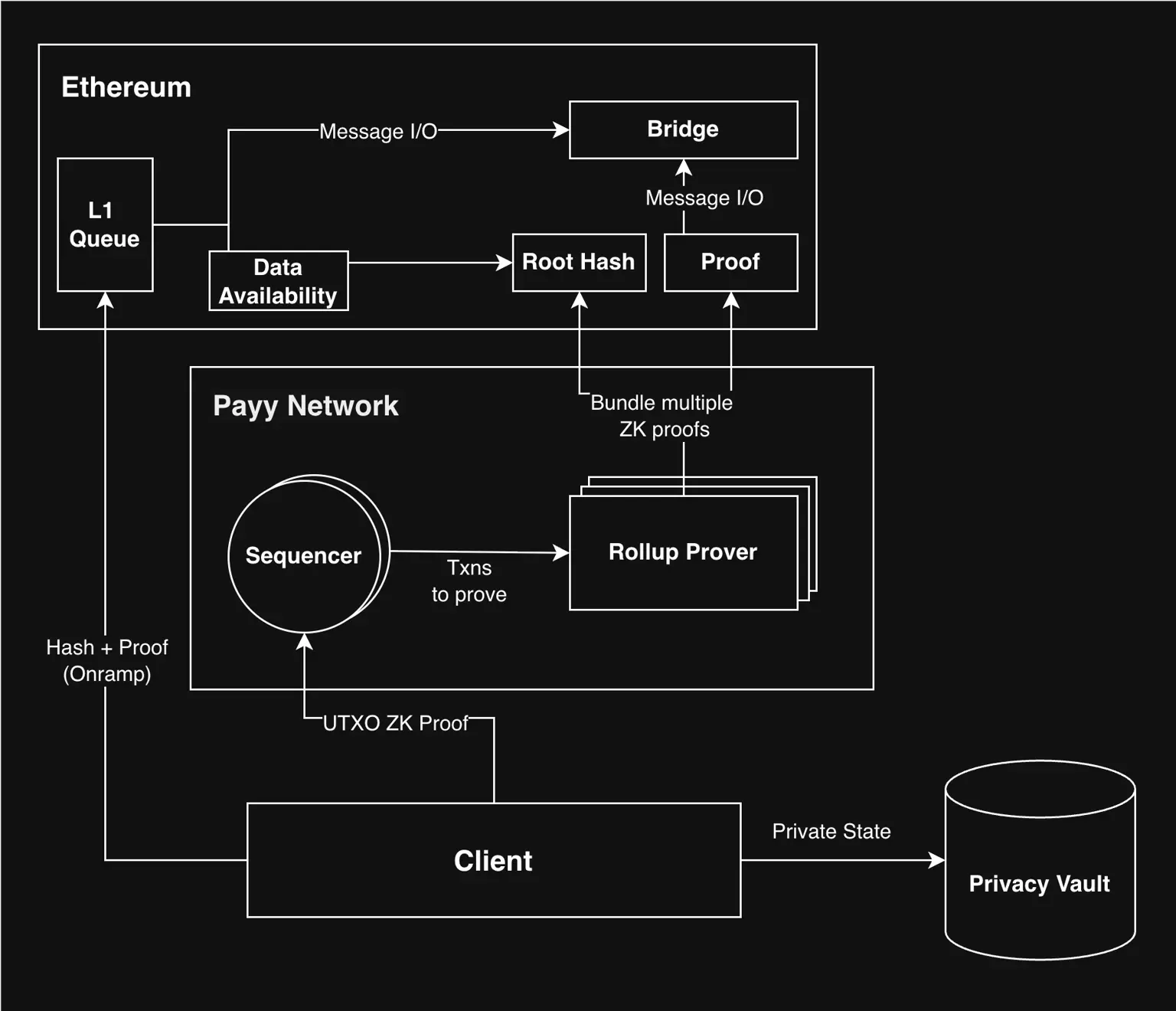
Payy Network is a two-tier Zero Knowledge Rollup based on the Ether Workshop, which is structured around the following roles:
- Sequencer ( sorter): Submit blocks to L1 for validation and ensure certainty in the order of transactions。
- Rollup Prover (proven node): Validation, validity, correctness or error of the sorted blocks。
- Client (client): is responsible for generating valid UTXO transaction certificates。
- Encrypted Registers (encrypted registration form, option): To store transaction data and enable the user to participate in the transaction in an offline state。
- Etherum (Etherium): Provide safety and data availability for the entire network。
Core logic: Privacy protection and efficient expansion based on the safety of the Taishu are achieved through the ZK demonstration + Rollup architecture。
2. Privacy architecture
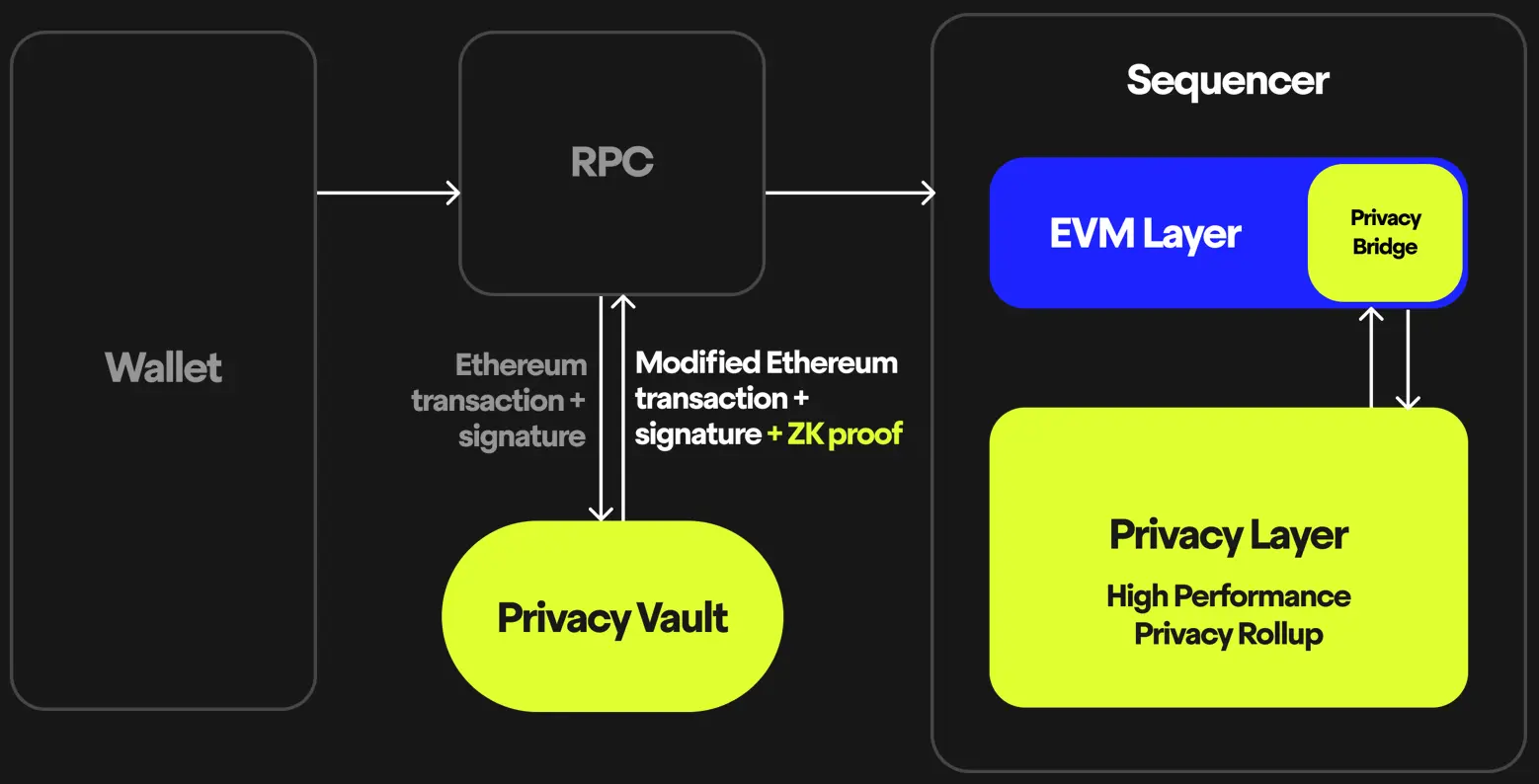
Payy achieves privacy protection through zero knowledge certification (ZK), while maintaining compatibility with EVM. Its privacy system comprises three core mechanisms:
- Private transfers: Total private transfers in support of ERC-20 and original currency
- Invisible transactions: anonymous transactions at EVM level through one-time addresses
- Original ZK (Native ZK): Provide low-cost ZK authentication capacity to support custom privacy applications
Core architecture components
- Privacy Layer (Present): High performance privacy Rollup, creating an independent privacy pool for each ERC-20
- Privacy Bridge (private bridge): Bridge component connecting the EVM layer to the privacy layer
- Privacy Vault (private vault): Storage of private data and certification of conversion of ordinary transactions to private transactions through ZK
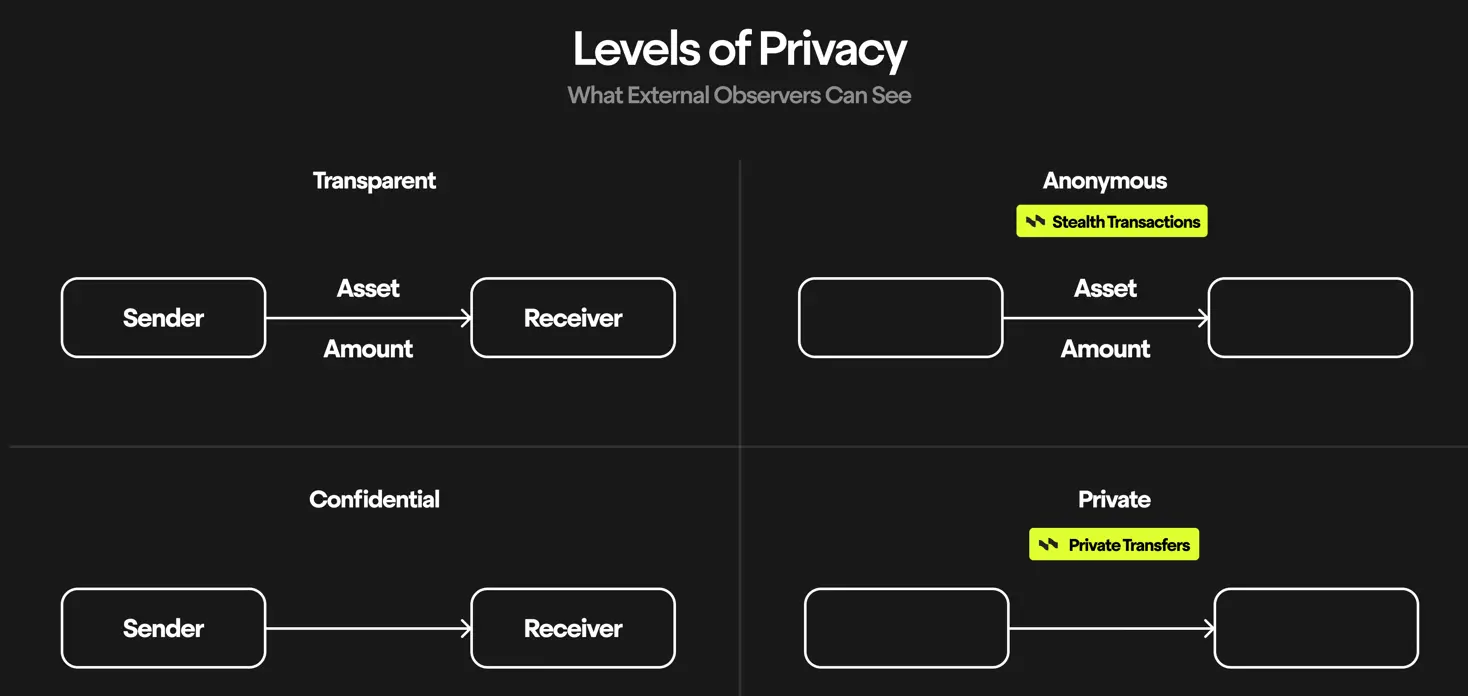
Privacy Level
- Private Transfers
EXECUTE ON A PRIVATE LEVEL, THE SENDER, THE RECEIVER, THE AMOUNT AND ASSETS ARE ALL HIDDEN, HIGH AND NO EVM EXTRA EXPENSES - Stealth Transports
IMPLEMENTED ON THE EVM LEVEL, BUT FUNDED ON A PRIVATE LEVEL, UNABLE TO TRACE REAL IDENTITY - Native ZK
Depending on the specific application scene
Encrypted tracer (Encrypted Lineage)
Payy uses the Nullifier (empty tag) mechanism to prevent the path of transactions being tracked and to ensure that funds are not exposed when moving between the privacy and EVM layers。
In exceptional circumstances (e.g., preventing malicious financial flows), the decryption of encrypted trace sources can be achieved through a chain-based governance proposal, balancing privacy with compliance。
Private transfer mechanisms
In Payy, private transfers are achieved in two ways:
- Direct call to PrivacyBridge: Authorize transfer of funds through ZK
- "Transparent Upgrade" with PriceVault (no wallet change required)
Transparency upgrade (core mechanism)
Payy supports the "unsensible privacy upgrade" of existing wallets:
- Users still use standard ERC-20 transfers (advice, unit256) or original transfers
- Send transactions properly via eth submit RawTransaction()
- No need to modify wallets or operating habits
when the system detects transfer transactions (e. g. function selector 0xa9059 cbb):
- RPC AutoCall PrivacyVault Request ZK Proof
- Privacy Vault certifies signatures and generates privacy certificates
- Eventually, the transaction is submitted to Privacy Bridge to complete the private transfer
Reception mechanism
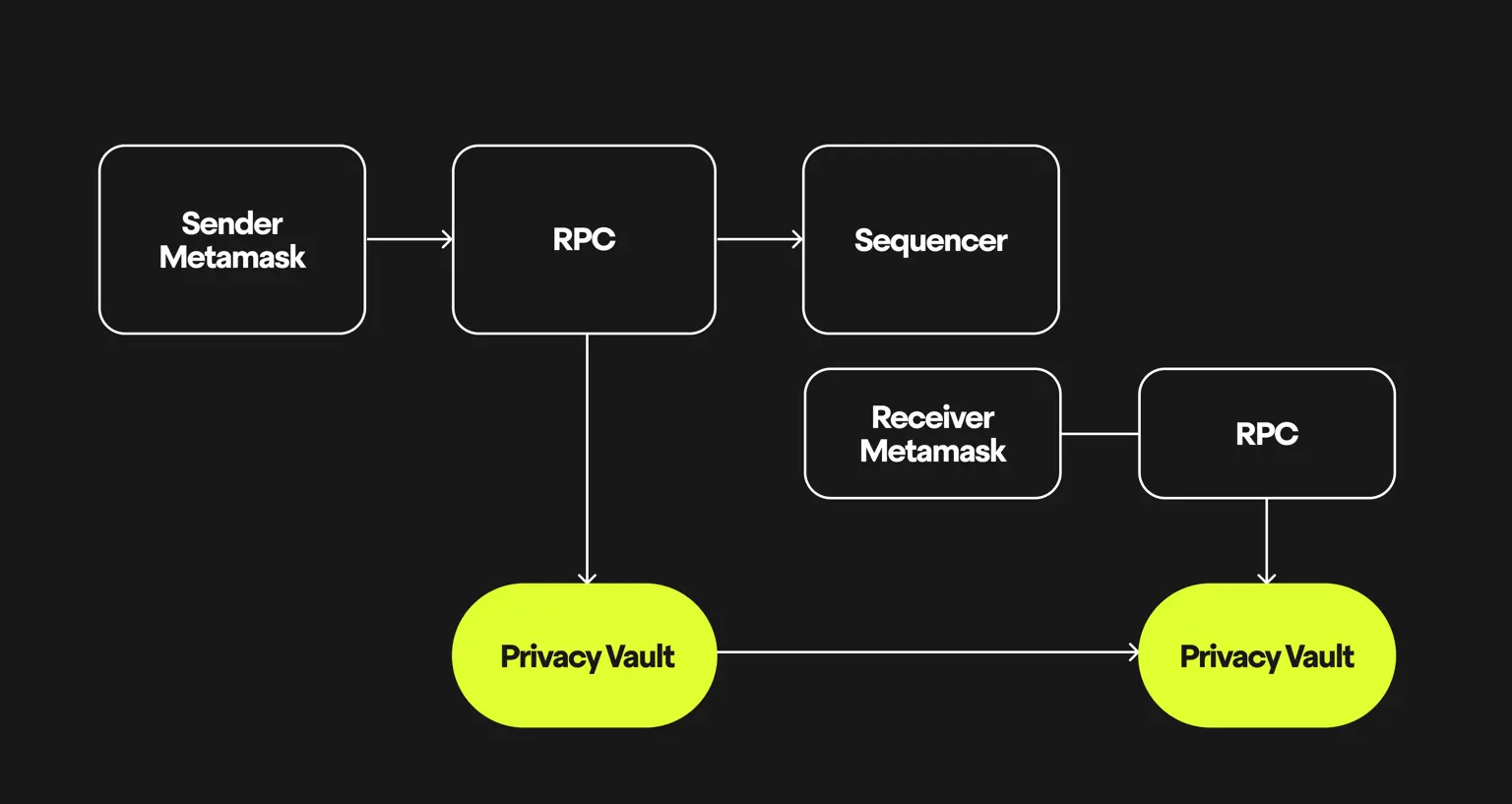
Because the transaction data is encrypted:
- The recipient needs to get the corresponding Note to withdraw the funds
- Privacy Vault determines the receiving address by Privacy Vault Registry
- The recipient's Privacy Vault will return the signature confirmation and complete the receipt of funds
Secret Transports
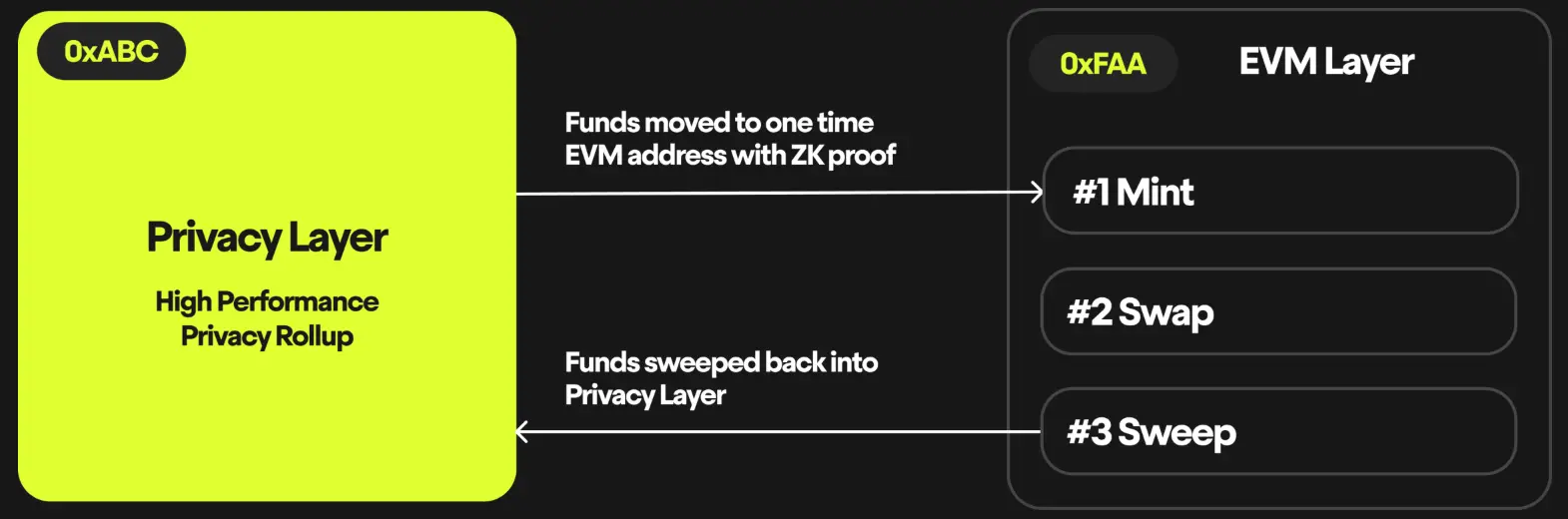
Payy achieves privacy trading capacity by introducing a one-time address mechanism at the EVM level. At its core is the ability to transfer funds seamlessly between the private level (Privacy Layer) and the EVM level, and to create an entirely new temporary address for each transaction。
FOR EXAMPLE, WHEN USERS MAKE A PRIVATE EXCHANGE FROM PUSD TO PAYY:
- Funds first extracted from the privacy level to a newly generated one-off address
- CONVERTING ON EVM FLOOR
- PAYY TOKENS CONVERTED AND RETURNED TO THE PRIVATE POOL
Since each transaction uses a different one-time address, external observers are unable to link the flow of funds, thereby achieving the privacy of the transaction。
Native ZK
Payy original supports zero knowledge certification (ZK) to enable developers to directly construct privacy applications on their networks, taking into account performance and cost efficiency。
On the traditional block chain, ZK proves that certification costs are extremely high and may consume more than 5 million gass (about 10 per cent of block space), making it difficult for most privacy applications to validate transactions on a case-by-case basis and relying on Rollup programmes。
In Payy:
- PROVIDE ORIGINAL ZK CERTIFICATION CAPACITY, SIGNIFICANTLY REDUCING COSTS
- DEVELOPER CAN CALL ZK DIRECTLY IN EVM SMART CONTRACT
- untrusted authentication of transactions under the chain
Tron points
Payy's core advantage is that it constructs a private stabilization currency payment system based on zero-knowledge technology, achieves default privacy transactions through “private layer + Stealth address + original ZK authentication” while compatible with EVM and supporting the unsensible upgrading of existing wallets, significantly reducing user access thresholds; folds the "private assets on the chain-real payments" with Visa cards; and upgrades performance and lower costs through the L2 Rollup architecture。
The potential disadvantage lies in the greater reliance on ZK infrastructure and privacy mobility, the complexity of the system and the high development and audit thresholds, while privacy characteristics may face compliance uncertainty in different regulatory environments. Overall, Payy is a front-line stable currency infrastructure that combines privacy, payment and scalability, but is still in the early stages of technological and ecological construction。
2. Detailed priorities for the week
Detailed total financing: $63.75 million, RRE Ventures and CREANDUM, Coinbase, GSR, OASIS and Framework - a bridge linking the proceeds and liquidity of national debt under the chain, Midas
Introduction
Midas is a platform oriented towards investing products in a portfolio chain. It allows strategy managers to monetize institutional-level investment strategies, allowing investors to acquire full transparency, instant foreclosure capacity, and primary composition in the DeFi ecology。
Midas is at the heart of the chain financial markets, building a unified financial ecosystem by providing chain-based investment products linking institutional-level strategy managers, DeFi agreements and investors。
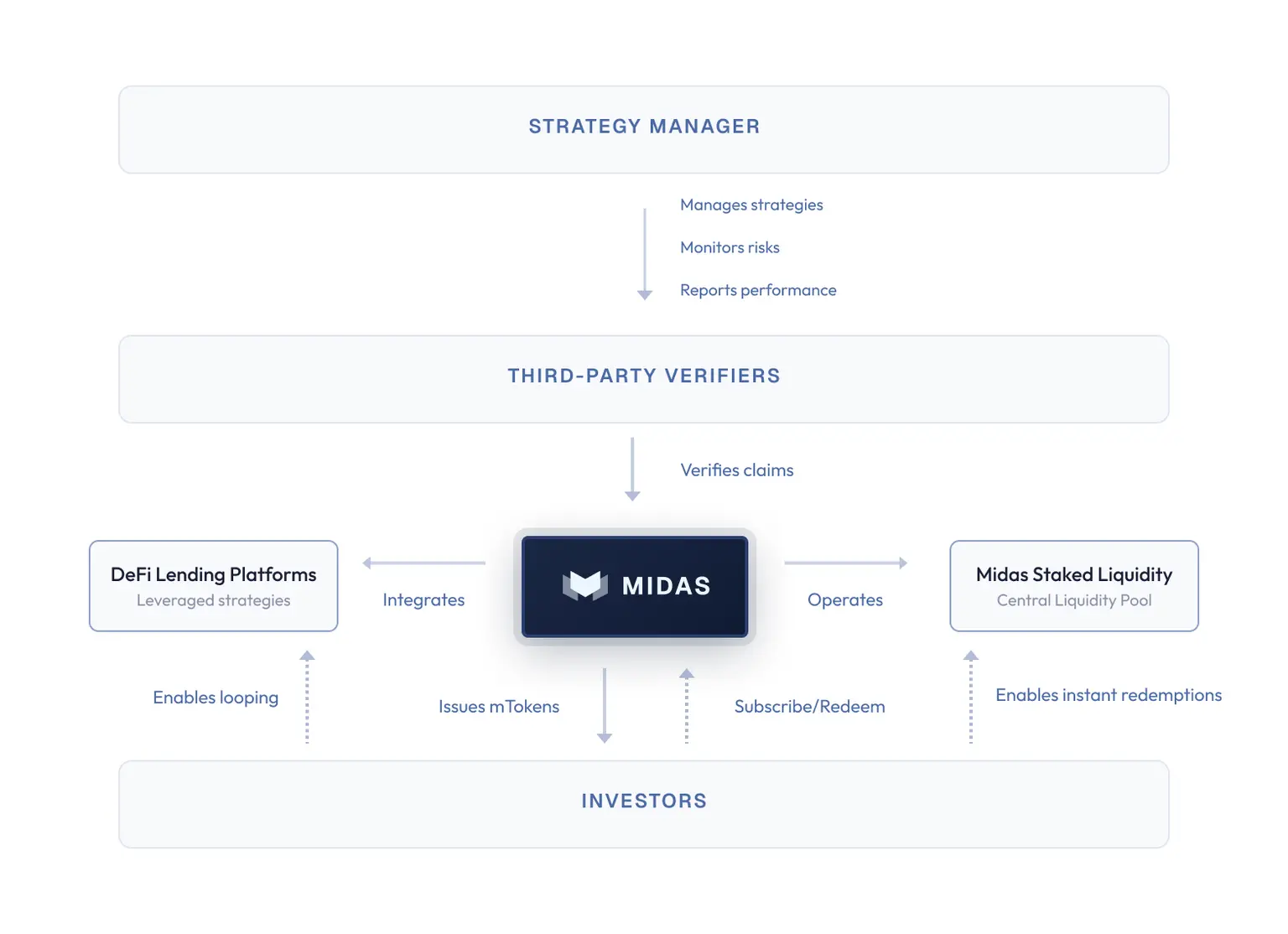
System architecture core resolution
1. Open liquidity architecture
Through its Open Liquidity Architecture, Midas provides investors with highly liquid, portfolioable chain-based investment products to address efficiency problems between chain-based and traditional financial settlement delays and achieve immediate access and capital efficiency。
Core mechanisms
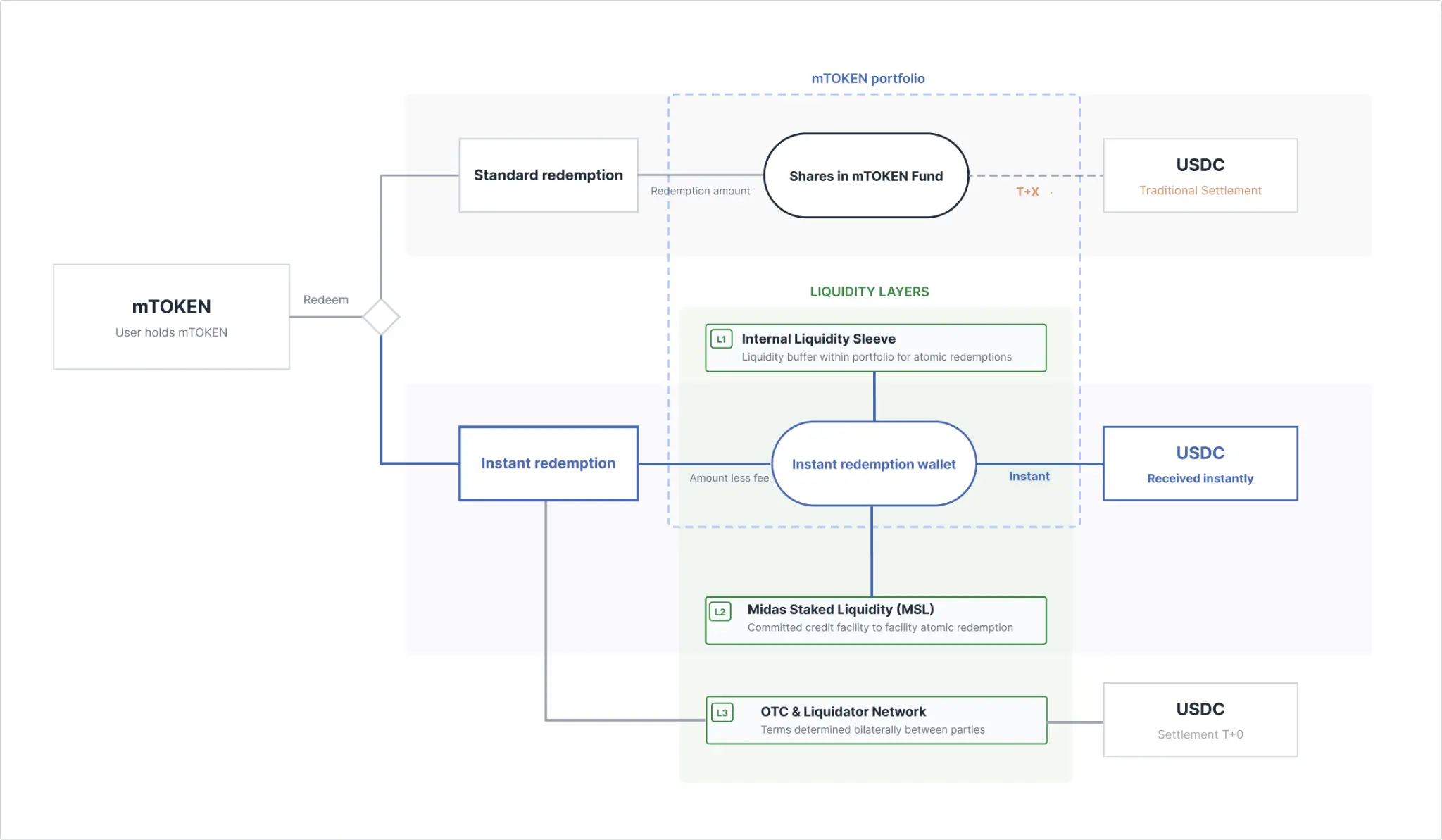
This structure compensates for the liquidity and settlement lag in traditional finance by introducing flexible foreclosure:
Standard Redemption
- No fees
- By natural settlement cycle of lower assets (possibly days or weeks)
- BASED ON NAV (NET VALUE) AT FINAL SETTLEMENT
Instant Redemption
- Provide on-demand mobility without waiting
- EXCHANGE INTO STABLE CURRENCY IMMEDIATELY (E. G. USDC)
- Reliance on dedicated liquidity pool
- Fixed fees charged
- Smart contract implementation:
- READ THE CURRENT NAV
- Destroy mToken
- Immediate return of stabilization coins
2. Midas Staked Limited (MSL)
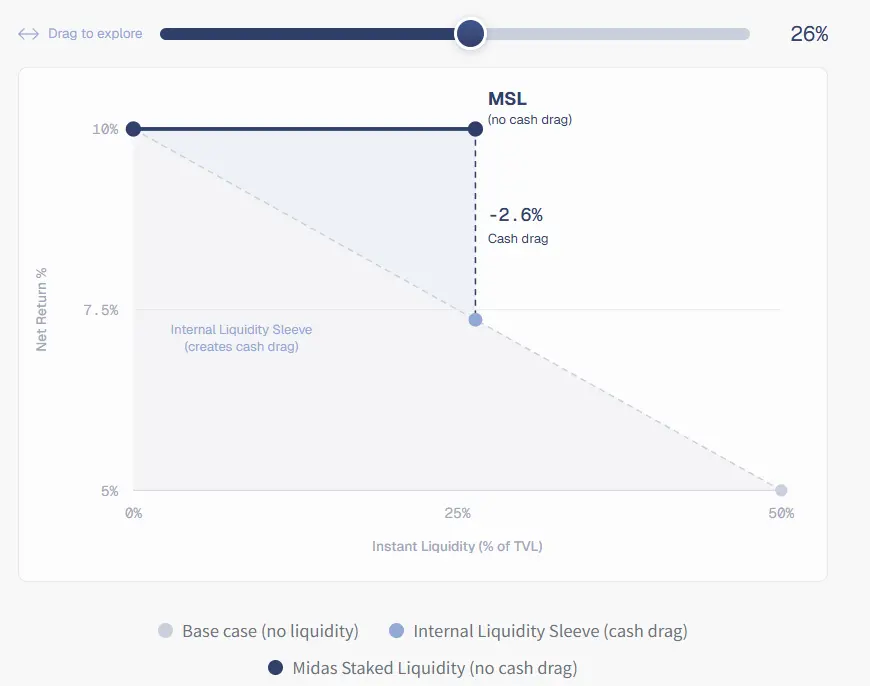
Midas Staked Limited (MSL) is a chain-based liquidity infrastructure for instant redemption (atomic settlement) designed to address the problem of “cash drag” in traditional combinations - that is, to retain idle cash in response to redemption, thereby reducing overall gains。
The MSL pool provides USDC to pay the user (net of fixed foreclosure costs) and destroys the corresponding mToken; the asset manager then repays the MSL through smart contracts once the assets under the chain have been settled, thus creating a chainable short-term liquidity lending relationship。
FOR LIQUIDITY PROVIDERS (LPS), MSL OFFERS A RISK-SEGREGATED RETURN OPPORTUNITY: IT DOES NOT TAKE THE RISK OF A BOTTOM ASSET, IT EARNS FORECLOSURE GAINS ONLY BY PROVIDING SHORT-TERM LIQUIDITY, AND ITS FUNDS HAVE PRIORITY IN THE STRUCTURE. OVERALL, MSL IS ESSENTIALLY A “HIGH-FREQUENCY LIQUIDITY SUPPLY LAYER WITHOUT MARKET RISK” SERVING THE TIME GAP BETWEEN CHAIN ASSETS AND REAL ASSET SETTLEMENT。
3. Transparency
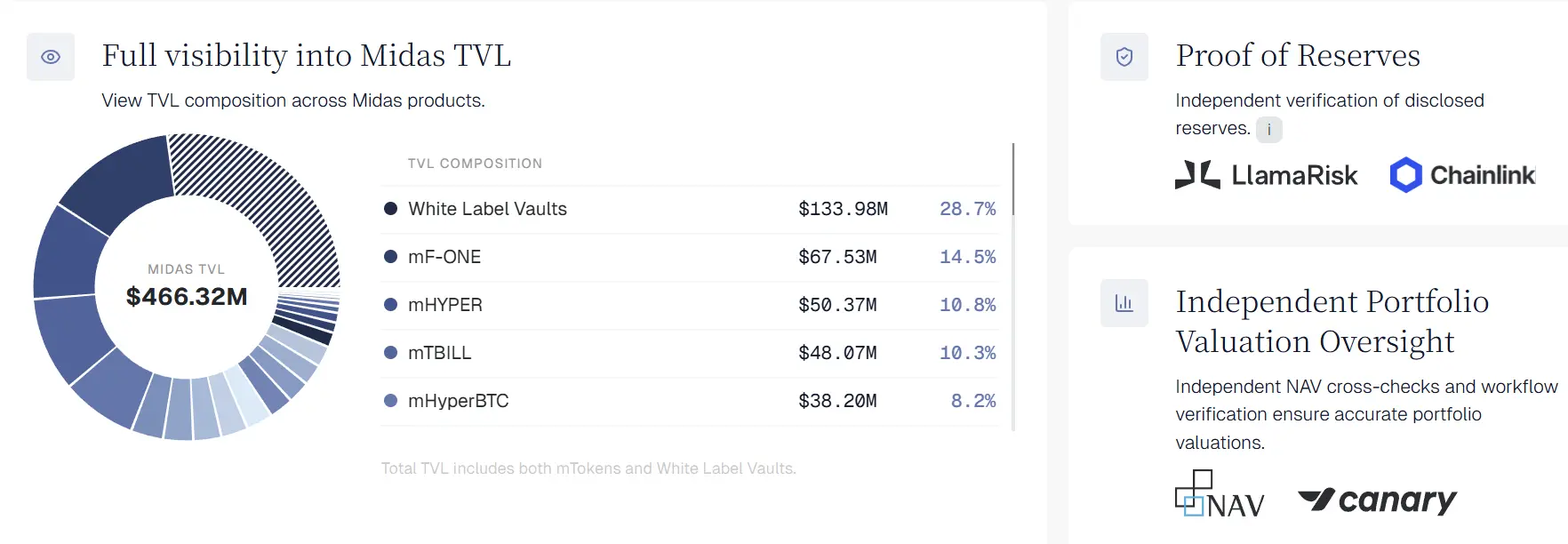
The core of Midas ' transparency system is:
Upgrade “disclosed” from traditional asset management to “valitable real-time transparency on the chain”
Core mechanisms
Link Certification
- Maps below-chain asset data (e.g., national debt, funds) and chain status through Midas Attestation Engineering
- periodically generate "checkpoints" on the chain
- For validation:
- NAV (NET)
- Size of encumbered assets
- Reserve status
Multivalid
- Introduce independent validation by third-party institutions (e.g., prophecies/wind control agencies)
- Reduce single point of confidence risk
- Improving data credibility and institutional acceptability
Full chain data transparency
The disclosure dimensions include:
- Bottom asset composition (e. g. T-Bills, MMF, etc.)
- Warehousing structure and distribution
- Change in net value
- Financial flows
The essence is:
From "Black Box Asset Pool" → "Viewable, Traceable Asset Structure"
HF updates and historical tracking
- Data are continuously updated by cycle (almost real time)
- Provide historical records and time series
- Support audit and retroactive
Key limitations
- Legal ownership
- Users do not hold assets directly at the bottom
- The essence is still structured financial products
4. Investment Risk Management
The core of Midas' risk management is:
Achieving a “traditional type of management” risk control framework through asset selection, structural isolation and operational constraints
Core mechanisms
HIGH-QUALITY ASSET FILTER (RWA PRIORITY)
- Mainly low-risk assets:
- T-Bills
- Money Market Funds (MMFs)
- Emphasizing stable returns rather than high volatility gains
Nature:
Proceeds from “very low credit risk assets”
Ring-Fencing
- Each mToken corresponds to the independent asset pool
- Risks between products are not transmitted to each other
Avoid:
- Systemic risk diffusion
- Impact of single asset crashes across the board
Liquidity management (core focus)
- SOLVE FORECLOSURE THROUGH MSL
- Avoid traditional “cash drag”
- And make sure I can redeem myself
Achieved:
High returns + high liquidity balance
Counterpart and operational risk control
- Use of compliance custodians
- Introduction of professional fund managers
- Limit Policy Range
Nature:
Reduced human operations and credit risk
Interest rate and market risk management
- The main exposures are:
- Interest rate fluctuations
- Macroeconomic market changes
- Reduced volatility through short-term assets
Technical and structural risks
- Smart contract risk
- Predicative machine risk
- Uplink/underlink sync risk
Adopted:
- Audit
- Multiple Authentication
- Modular design
Risk reduction
Critical risk points (implicit)
- Reliance on sub-chain assets and custodians
- Incomplete decentralisation
- Liquidity pressures may still occur in extreme market conditions
Tron points
Midas has the core advantage of combining traditional enterprise-level asset management (e.g., national debt, MMF) with chain-based transparency mechanisms to achieve near real-time asset visualization and auditability through chain certification, multiple validation and high-frequency disclosures, while addressing the issue of foreclosure and “cash drags” through the MSL liquidity layer, while ensuring liquidity while improving efficiency of returns; its risk-control system is also robust, emphasizing low-risk asset allocation and asset isolation。
However, its potential disadvantage lies in the dependence on the chain of assets and custodians, which remains essentially structured rather than completely decentrized, and the fact that users do not have direct legal rights to the bottom asset; in addition, factors such as predictors, settlement cycles and extreme market liquidity pressures may still pose systemic risks in exceptional circumstances。
III. Analysis of industry data
1. Overall market performance
1.1. Trends in spot BTC vs ETH prices
BTC
ETH
Summary of hotspots
1. ZK / PRIVACY CALCULATIONS
- MULTI-PROJECT ADVANCE ZK RECURSIVE CERTIFICATION AND CROSS-CHAIN CERTIFICATION CAPACITY, WITH EMPHASIS ON UPGRADING MULTI-CHAIN ASSET AGGREGATION AND LOW-COST CERTIFICATION (JOINT EIP-1108 / 4844)
- ** PRIVACY IDENTITY (DID + ZK) ** STARTED FROM SINGLE CHAIN TO MULTI-CHAIN DATA UNIFIED AUTHENTICATION, ACTING TO THE "UPLINK IDENTITY LAYER" IN
2. RWA (REAL WORLD ASSET)
- RWA PROTOCOL TO ENHANCE COMPLIANCE ENFORCEMENT LEVEL ON CHAIN (RULED ENGINE + HOSTING + ORDER BOOK)
- Technology shift from “assets uplink” to settlement, liquidity and deFi portability
3. AI + Crypto
- AI Agent gradually moves from tool to implementer on the chain
- The infrastructure portfolio of "AI services + chain payment/account system" (e. g. LLM Service type architecture)
- Technical orientation focused on automated transactions, chain-up calls and payment closed loops
DeFi / Derivatives
- DEX CONTINUED TO ** MULTIFUNCTIONAL PLATFORM (TRANSACTION + BORROWING + FORECAST MARKET)** IN
- Derivatives protocol enhancement chain alignment and modularization of risk engines
5. INFRASTRUCTURE (MULTIPLE VM/ EXECUTIVE LEVEL)
- "Blended E analysis (multi-VM unified)" becomes a new trend (E VM + WA S M + S VM)
- technical focus: unity status, cross-linguistic contract interaction and zk certification optimization
IV. Macro data review and key data release nodes next week
Last week, at the macro level, there was an overall pattern of “inflation expectations repeated + interest rates maintained high expectations”:
- For the United States, employment-consumption-related data remained generally resilient, with no clear signs of cooling, delaying short-term interest rate reductions expected from the market
- THE UNITED STATES DEBT RATE OF RETURN MAINTAINED A HIGH SHOCK, THE 10Y RATE OF RETURN FLUCTUATED BUT DID NOT GO DOWN EFFECTIVELY, STIFLING AT-RISK ASSETS
- There's a phase back of gold, which means the market is on the edge
- The United States dollar index is operating at a high level and funds remain biased towards dollar assets
Next week, the focus will be on three types of data (directly affecting market direction):
1. UNITED STATES INFLATION DATA (CPI / PPI)
- Impact: to determine the market ' s determination of the Federal Reserve ' s policy path
- Key points:
- If inflation is higher than expected, interest rates are maintained longer
- If the fall is clear, the interest rate is expected to pick up, and the market is good
Retail Sales
- Impact: Reflects whether consumption begins to weaken
- Key points:
- Strong, economically resilient, slow down
- Weaknesses, economic cooling, liquidity expectations
3. Initial unemployment benefit / employment marginal data
- Impact: Watching whether employment has begun to weaken
- Key points:
- If you keep going up, you're gonna have to back up your interest rate
- If you keep low, you keep your interest rates high
Regulatory policy
United States
5 May: United States currency stabilization is at the implementation stage。
Discussions on the regulatory rules around GENIUS Act continued, with BlackRock and others submitting comments to OCC, focusing on stabilization of the range of reserve assets, hosting requirements and compliance with the use of national debt-denominated assets. Market concerns have shifted from “regulated” to “how to implement”。
6 MAY: CFTC CONTINUES TO ADVANCE THE NON-TRUST WALLET LIABILITY BOUNDARY DISCUSSION。
Discussions continued at the United States regulatory level on the division of responsibilities between non-host wallets and neutral software developers, with a focus on identifying which acts are “financial intermediaries” and which are provided only by technical interfaces. This direction has a greater ecological impact on DeFi and the wallet on the chain。
EU / Italy
6 May: EU continues to advance preparations for full implementation of the MiCA。
EU regulators and member States continue to coordinate around the eventual drop of the MiCA, focusing on the stable currency reserves, information disclosure, the CASP (encrypted asset service provider) licence plate and operational resilience requirements。
7 MAY: THE CENTRAL BANK OF ITALY PROMOTED THE “DIALITIZATION SEPA” DISCUSSION。
THE CENTRAL BANK OF ITALY HAS PUBLICLY CALLED FOR AN ASSESSMENT OF THE EXPANSION OF THE SEPA PAYMENT SYSTEM TO A MONETIZED FINANCIAL LANDSCAPE, HOPING THAT THE EU PAYMENT SYSTEM WILL FIT THE DISTRIBUTION CHAIN WITH DIGITAL ASSET FLOWS。
Hong Kong, China
8 May: the regulatory framework for Hong Kong ' s stable currency entered a substantive advance。
FOLLOWING THE PASSAGE OF THE HONG KONG STABILISATION CURRENCY ACT, HKMA HAS CONTINUED TO ADVANCE THE FOLLOW-UP LICENSING AND ENFORCEMENT RULES, WITH EMPHASIS ON AML, TRANSPARENCY OF RESERVES AND ISSUER GOVERNANCE REQUIREMENTS. HONG KONG IS FURTHER STRENGTHENING ITS ASIAN COMPLIANCE ENCRYPTION CENTRE。
Korea
May 8th: Korea continues to engage in regulatory discussions around the issuers of the Korean Won stabilization currency。
THE CENTRAL BANK OF KOREA (BOK) AND THE FINANCIAL REGULATORY AUTHORITY (FSC) CONTINUE TO DISAGREE ON WHETHER “BANKS ALONE ARE ALLOWED TO ISSUE STABLE COINS” OR “TECHNOLOGY COMPANIES ARE ALLOWED TO PARTICIPATE”. THE ISSUE HAS BECOME ONE OF THE MAJOR FOCUS OF KOREAN ENCRYPTION POLICY。
Japan
9 MAY: JAPAN CONTINUES TO ADVANCE THE IMPLEMENTATION OF THE FIEA ENCRYPTION ASSET REFORM。
Japan ' s regulatory hierarchy continues to promote reforms in the financialization of encrypted assets, including requirements for exchange liability reserves, stable currency rules and tax adjustments, and is strengthening its institutionalization and compliance with the digital asset market structure。
UAE
10 May: the Abu Dhabi currency stabilization plan continues。
Institutions such as the Abu Dhabi Sovereign Fund ADQ, First Abu Dhabi Bank have promoted the Dirham stabilization currency project, and UAE has continued to strengthen its deployment in the Middle East in the field of digital assets and payment settlement。
Singapore
MAY 10TH: MAS CONTINUES TO STRENGTHEN THE REGULATION OF CURRENCY STABILIZATION AND PAYMENT PLATES。
THE MONETARY AUTHORITY OF SINGAPORE (MAS) CONTINUES TO ADVANCE THE FRAMEWORK FOR THE STABILIZATION OF CURRENCY AND PAYMENT OF SERVICE LICENCE PLATES, FOCUSING ON RESERVE ASSETS, FINANCIAL ISOLATION AND CONSUMER PROTECTION, AND MAINTAINS AN “OPEN BUT HIGH COMPLIANCE THRESHOLD” REGULATORY PATH。
